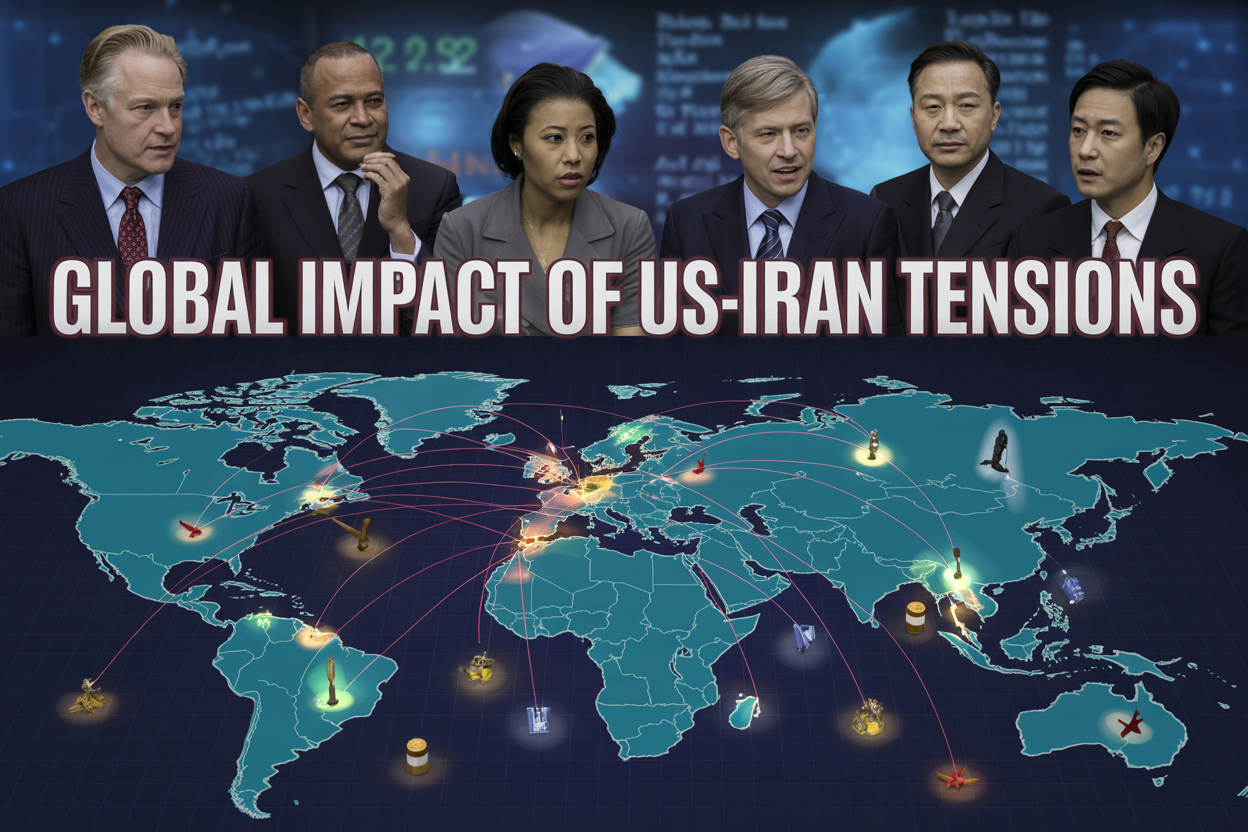
Rising tensions ( US-Iran War ) between the US and Iran send shockwaves across the globe, affecting everyone from your local gas station to international markets. This guide breaks down the US Iran war effects for anyone wanting to understand how this conflict reaches far beyond the Middle East into our daily lives.
Whether you’re a concerned citizen tracking world events, a business owner monitoring market volatility, or simply someone curious about global politics, these developments impact you more than you might realize.
We’ll explore how international leaders are scrambling to respond to escalating tensions, examine the ripple effects hitting the world economy and global security, and reveal how major powers like China and Russia are repositioning themselves as this crisis unfolds. You’ll discover why what happens thousands of miles away in the Persian Gulf could soon affect everything from the price you pay at the pump to the stability of international trade routes.
Immediate International Reactions to US-Israeli Military Action
UN Security Council Emergency Session and Condemnation
The international reactions to US Iran military action triggered immediate diplomatic responses at the highest levels of global governance. UN Secretary General Antonio Guterres swiftly condemned the military escalation, warning that international peace and security were being fundamentally undermined by the joint US-Israeli strikes on Iranian cities.
In his official statement, Guterres emphasized that “the use of force by the United States and Israel against Iran, and the subsequent retaliation by Iran across the region, undermine international peace and security.” His urgent call for an immediate cessation of hostilities highlighted the gravity of the situation, as he warned that failing to de-escalate “risks a wider regional conflict with grave consequences for civilians and regional stability.”
The UN Security Council convened an emergency session in New York on Saturday afternoon to address the crisis. During this critical meeting, US Ambassador Mike Waltz defended the strikes as strategically necessary, stating they were “directed toward specific and strategic objectives: to dismantle missile capabilities that threaten allies, to degrade naval assets used to destabilise international waters, and to disrupt the machinery that arms proxy militias and to ensure the Iranian regime, never ever can threaten the world with a nuclear weapon.”
Israeli Ambassador Danny Danon reinforced this position, declaring that “Israel together with the United States acted to stop an existential threat to Israel, to our allies, and to global stability.” The Israeli representative emphasized their interpretation of Iranian rhetoric, stating that when a regime chants “death to Israel” and “Death to America,” they take such threats seriously and act accordingly.
UN Human Rights Chief Volker Türk added another dimension to the international condemnation by calling for restraint and urging all parties “to see reason, to de-escalate, and for a return to the ‘negotiating table.'” His statement underscored the humanitarian concerns, reminding involved parties that “as always, in any armed conflict, it is civilians who end up paying the ultimate price.”
European Leaders Call for Diplomatic Solutions
European leaders responded to the US Iran war effects with unified calls for diplomatic resolution while carefully distancing themselves from direct participation in the military actions. A joint statement by French President Emmanuel Macron, German Chancellor Friedrich Merz, and UK Prime Minister Sir Keir Starmer marked a coordinated European response to the escalating crisis.
The three European leaders explicitly stated, “We did not participate in these strikes,” while maintaining contact with international partners, including the US, Israel, and regional actors. Their joint declaration, posted through the German Embassy in London, urged Iran to “seek a negotiated solution” and emphasized that “ultimately, the Iranian people must be allowed to determine their future.”
The European position reflected months of consistent messaging, as the statement noted they had “consistently urged the Iranian regime to end its nuclear and missile programs, refrain from destabilising activity, and to stop the appalling violence and repression against its own people.” This approach demonstrated Europe’s commitment to diplomatic solutions while acknowledging the complexity of the international reactions to US Iran tensions.
French President Macron separately characterized the conflict as an “outbreak” with “grave consequences for international peace and security,” warning that ongoing escalation is “dangerous for all.” He also indicated France’s readiness to “deploy the necessary resources to protect its closest partners at their request,” showing solidarity with regional allies while maintaining diplomatic distance from the military operations.
Germany’s Chancellor Merz confirmed that his government was informed of the attack in advance and had consulted with relevant security ministers. This advance notification highlighted the coordination between allies even as European leaders sought diplomatic alternatives.
Kaja Kallas, the European Union’s top diplomat, described the latest developments as “perilous” and emphasized that “the EU has adopted strong sanctions against Iran and supported diplomatic solutions, including on the nuclear issue.” Her statement reinforced Europe’s preference for economic and diplomatic pressure over military action.
Regional Middle Eastern Responses and Escalation
The geopolitical consequences of the US Iran conflict manifested dramatically across the Middle East, with regional powers taking decisive positions that reflected deep-seated sectarian and strategic divisions. Saudi Arabia emerged as a vocal critic of Iranian actions, particularly condemning Iran’s retaliatory attacks on Bahrain, the UAE, Qatar, Jordan, and Kuwait.
The Saudi foreign ministry issued a strong statement denouncing what it called “blatant Iranian aggression” in the “strongest terms.” The Kingdom’s response demonstrated the broader regional impact of the conflict, as Saudi Arabia “affirms its full solidarity with and unwavering support for the brotherly countries, and its readiness to place all its capabilities at their disposal in support of any measures they may undertake.”
This Saudi positioning highlighted how the US Iran military action international response created ripple effects throughout the Gulf region, with traditional Iranian rivals aligning against Tehran’s retaliatory measures. The Iranian Foreign Minister Abbas Araghchi responded to the escalating regional tensions by blasting the joint US and Israel strikes as “wholly unprovoked, illegal, and illegitimate.”
In a particularly pointed criticism posted on X, Araghchi accused President Trump of turning “America First into Israel First – which always means America Last,” indicating Iran’s strategy to drive wedges between the US and its regional and global partners. This rhetorical approach demonstrated how regional players sought to exploit the international reactions to reframe the conflict narrative.
The spillover effects extended beyond diplomatic statements, as Iran’s retaliatory strikes across multiple Gulf nations created a multi-front crisis that threatened to engulf the entire region. The targeting of Bahrain, UAE, Qatar, Jordan, and Kuwait represented a significant escalation that transformed bilateral US-Iran tensions into a broader regional conflict with implications for global energy markets and shipping lanes.
Russian Condemnation and Alliance Implications
Russia’s response to the US Iran crisis highlighted the global security implications and alliance dynamics surrounding the conflict. As Iran’s key ally, Russia condemned the strikes through its UN Security Council Ambassador Vasily Nebenzia, who warned that “the aggression that Iran was subjected to today has already resulted in an escalation in the region and could spill over far beyond its borders.”
The Russian position reflected broader concerns about international law and regional stability. Moscow called on the international community to assess what it termed “irresponsible actions aimed at undermining peace, stability, and security” in the Middle East. This condemnation carried particular weight given Russia’s status as a permanent UN Security Council member and its strategic partnership with Iran.
Russian officials emphasized that “active and serious negotiations have yet again been undermined,” pointing to the diplomatic processes that had been ongoing regarding Iran’s nuclear program. The Russian response included direct appeals to the United States, with officials writing on X that the strikes “don’t serve their interests or that of global peace” and urging Washington: “I urge the United States not to get sucked in further. This is not your war.”
This Russian positioning demonstrated how the Iran war spillover effects extended beyond the Middle East to involve major powers in a complex web of competing interests and alliances. Russia’s condemnation also reflected its broader strategic competition with the United States and its efforts to position itself as a defender of international law and sovereignty principles.
The alliance implications became particularly significant as Russia’s support for Iran created potential flashpoints for broader US-Russia tensions, transforming what began as a regional conflict into a potential catalyst for great power confrontation with worldwide ramifications for international stability and security.
Global Economic and Security Consequences
Oil Price Spikes and Energy Market Disruption
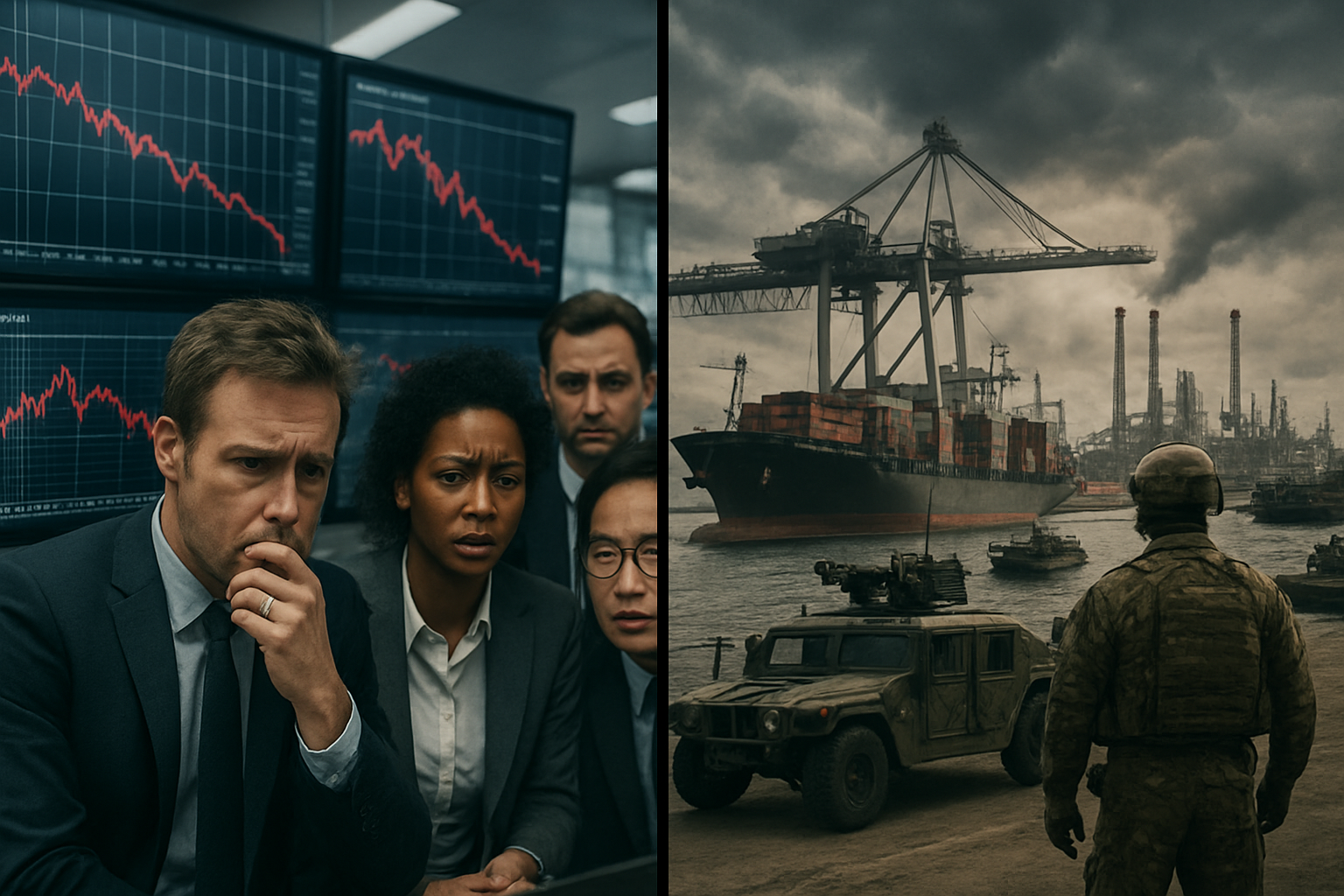
The US Iran war effects on global energy markets represent one of the most immediate and far-reaching consequences of the conflict. Oil prices have surged above $100 per barrel following the outbreak of hostilities, creating significant economic ripple effects worldwide. This dramatic price increase stems directly from disrupted energy production and transportation in the region, fundamentally altering the global energy landscape.
The scale and persistence of this energy shock will ultimately determine the broader economic impact on importing nations. For countries heavily dependent on energy imports, the primary transmission channel operates through inflation as higher oil and gas prices increase the import bill faced by households and firms, squeezing real incomes and eroding purchasing power. European economies, along with major Asian markets including China, India, Japan, South Korea, and Taiwan, face the most substantial burden from these elevated energy costs.
In contrast, large net energy exporters outside the Gulf region whose production capabilities remain unaffected stand to benefit significantly from the price surge. Countries such as Norway, Russia, and Canada are positioned as clear winners in this scenario, experiencing positive terms of trade shifts as global energy demand redirects toward their supplies.
Threats to International Shipping Routes
The Iran war economic impact worldwide becomes particularly acute when examining critical maritime chokepoints. Around 25% of global seaborne oil passes through the Strait of Hormuz, along with roughly 20% of liquefied natural gas (LNG) shipments. The collapse of shipments through this narrow waterway has created immediate consequences for global energy markets, with shipping disruptions extending far beyond the immediate conflict zone.
These transportation bottlenecks reveal previously hidden vulnerabilities in global supply chains. The region’s role as a significant producer of specialized materials compounds the shipping crisis – Qatar alone produces approximately 40% of the world’s helium, essential for semiconductor manufacturing. Additionally, the area serves as a major source of ammonia and nitrogen, key ingredients in synthetic fertilizer products, creating potential agricultural supply chain disruptions.
Impact on Chinese Investment and Trade Relations
Now that we have covered energy market disruptions, the geopolitical consequences US Iran conflict extends significantly to China’s economic positioning. As one of the world’s largest energy importers, China faces substantial economic headwinds from elevated oil and gas prices. Energy imports account for a considerable share of China’s GDP, placing the country among those most vulnerable to sustained price increases.
The conflict forces China to reassess its investment strategies and trade relationships across the Middle East region. Higher energy costs directly impact China’s manufacturing competitiveness and domestic inflation rates, potentially requiring policy adjustments to maintain economic stability. The situation also affects China’s broader Belt and Road Initiative investments in the region, as security concerns and economic volatility create uncertainties for long-term infrastructure projects.
Regional Stability Risks for Gulf States
With this in mind, the Middle East conflict global effects extend throughout the Gulf region, where neighboring states face significant economic and security challenges. The Gulf economies, accounting for approximately 2-3% of global GDP, experience direct economic disruption despite their relatively modest share of world output. Historical precedent suggests that even short-lived conflicts can cause economic contractions of around 1% in quarterly GDP for regional economies.
Gulf states must navigate the complex balance between maintaining regional relationships and ensuring their own economic stability. The conflict disrupts tourism, postpones investment projects, and creates uncertainty in energy markets that these nations depend upon for government revenues. More prolonged hostilities would inflict deeper economic wounds on the region, with output disruptions potentially lasting well beyond the immediate conflict period.
The spillover effects create particular vulnerabilities for countries with extensive energy subsidies and already strained government finances. Nations like Egypt and Tunisia appear particularly exposed to bond market instability as higher energy prices strain public finances. Similarly, Pakistan’s fragile economic position faces additional pressure from surging global energy costs, potentially destabilizing the country’s recovery efforts.
Strategic Positioning of Major World Powers
China’s Difficult Balancing Act Between Iran and Gulf Partners
China finds itself in an increasingly precarious position as the US Iran war effects continue to unfold across global markets and diplomatic channels. Beijing’s complex web of economic relationships in the Middle East has created competing pressures that threaten to undermine its carefully cultivated neutrality. With Iran’s effective closure of the Strait of Hormuz causing a global energy shock and oil prices reaching $97.40 per barrel by March 2026, China faces significant challenges in maintaining its strategic partnerships with both Iranian leadership and Gulf states.
The economic implications of this balancing act extend far beyond energy procurement. China’s Belt and Road Initiative has substantial investments in both Iranian infrastructure and Gulf state projects, creating conflicting loyalties when regional tensions escalate. As the conflict has expanded into a regional war with widespread ramifications for supply chains, Chinese officials must navigate between supporting Iran’s sovereignty claims while maintaining access to Gulf energy resources and investment opportunities.
Beijing’s response to the international reactions US Iran tensions has been notably measured, avoiding explicit condemnation of either side while calling for diplomatic resolution. This approach reflects China’s understanding that taking sides could jeopardize its long-term strategic interests in a region critical to its energy security and economic expansion plans.
Russia’s Limited Support Despite Alliance Commitments
Despite historical ties and shared opposition to U.S. regional dominance, Russia’s response to the escalating conflict has been characterized by cautious restraint rather than full-throated support for Iran. Moscow’s limited backing comes despite previous alliance commitments and ongoing cooperation agreements with Tehran across various sectors, including nuclear technology and military equipment.
The geopolitical consequences US Iran conflict has created complications for Russian foreign policy calculations. While the Kremlin initially provided diplomatic support to Iran following the February 28, 2026 attacks that killed Supreme Leader Ayatollah Ali Khamenei, Russia has stopped short of providing direct military assistance or intervention. This measured approach reflects Moscow’s assessment that deeper involvement could escalate tensions with the United States beyond acceptable risk thresholds.
Russia’s reluctance to provide substantial support has become more pronounced as the conflict expanded beyond bilateral U.S.-Iran exchanges. The death of Iran’s Supreme Leader and subsequent appointment of Mojtaba Khamenei as his successor in March 2026 created uncertainty about Iran’s strategic direction, making Russian officials more cautious about commitments to the new leadership structure.
European Union’s Struggle Between Legal Principles and US Alignment
The European Union faces a fundamental tension between upholding international legal principles and maintaining transatlantic solidarity as the Middle East conflict global effects continue to reverberate across diplomatic channels. Major European powers have largely refused to participate in military intervention despite sustained U.S. pressure to help unblock the Strait of Hormuz, demonstrating the limits of Atlantic alliance cohesion when core legal principles are at stake.
European officials have expressed deep concern about the escalation following Operation Epic Fury’s nearly 900 strikes on Iran’s military assets, viewing these actions as potentially violating international law regarding proportionality and civilian protection. The targeted killing of Iranian leadership, including Supreme Leader Ayatollah Khamenei, has particularly troubled European capitals that prioritize diplomatic engagement over military solutions.
The Iran war economic impact worldwide has created additional pressure on European decision-makers as energy prices surge and supply chains face disruption. However, the EU’s institutional commitment to multilateral diplomacy and legal frameworks has prevented broader military alignment with U.S. operations, despite significant economic costs from Iranian retaliation against Gulf infrastructure.
Canada’s Cautious Support While Maintaining Diplomatic Balance
Canada’s approach to the escalating crisis exemplifies the challenges facing middle powers in navigating between alliance obligations and diplomatic principle. Ottawa has provided measured support for U.S. positions while carefully avoiding military commitments that could escalate regional tensions or compromise Canada’s traditional role as a diplomatic mediator.
Canadian officials have emphasized the importance of protecting civilian infrastructure following Iran’s targeting of energy facilities and civilian assets in Gulf states. However, Canada has refrained from direct military participation in operations to reopen the Strait of Hormuz, instead focusing on humanitarian assistance and diplomatic engagement with regional partners.
The global security Iran crisis has tested Canada’s ability to balance its NATO commitments with its preference for multilateral approaches to international conflicts. Prime Minister’s office statements have consistently called for de-escalation while supporting international efforts to address Iran’s nuclear program through diplomatic channels rather than military pressure.
Canada’s position reflects broader international uncertainty about the conflict’s trajectory, particularly following the leadership transition in Tehran and ongoing U.S.-Iran negotiations that remain contentious over nuclear issues and regional activities. This cautious approach allows Canada to maintain flexibility should diplomatic opportunities emerge while avoiding deeper entanglement in what has become a regional war with significant spillover effects across multiple countries.
Regional Spillover Effects and Military Responses
Iranian Retaliation Against Gulf State Allies
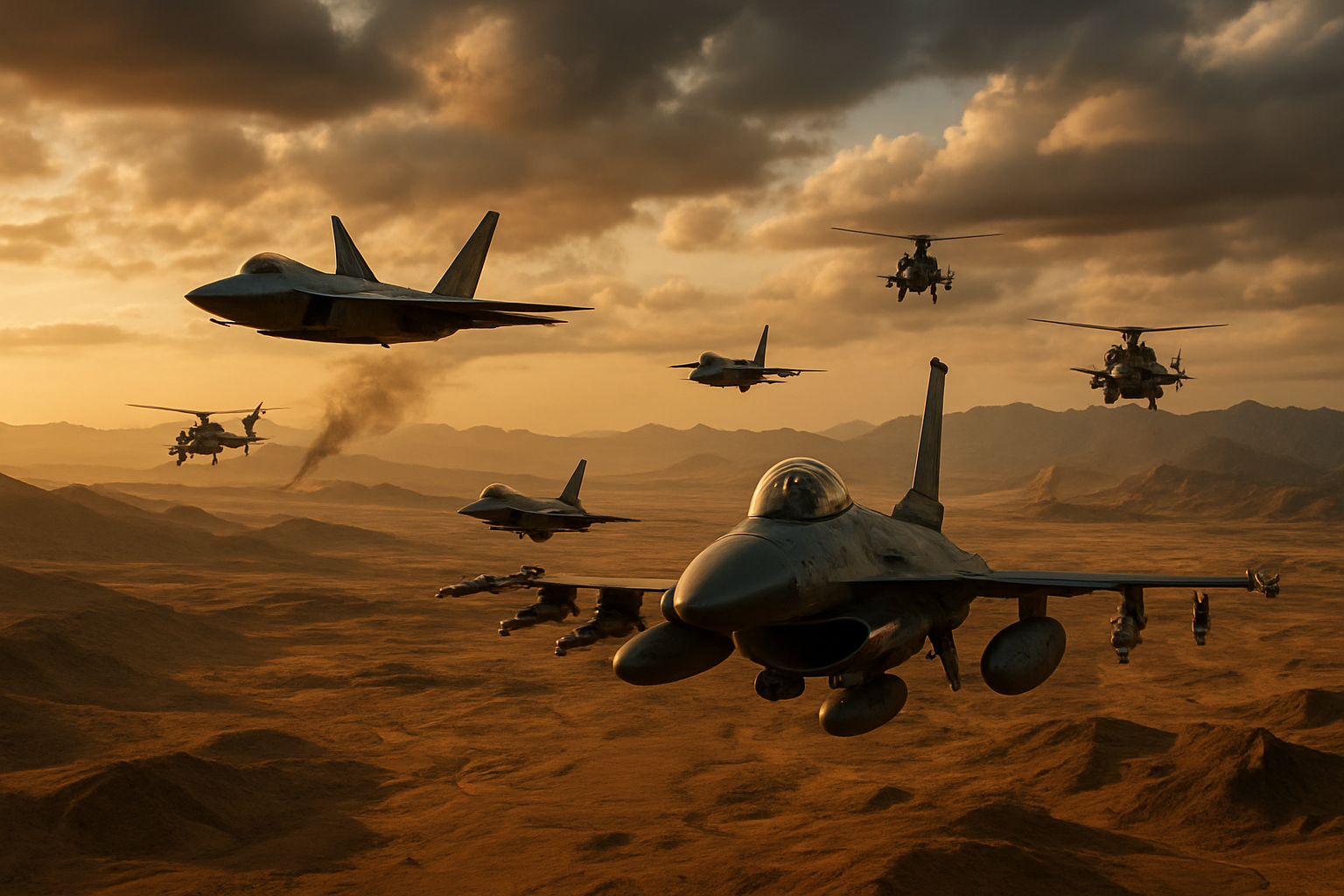
Iran’s immediate response to the US-Israeli strikes demonstrates the regime’s strategy of imposing maximum economic and political costs across the region. Tehran has unleashed unprecedented barrages of missiles and drones targeting not only US military installations but also civilian infrastructure throughout the Gulf states, effectively dragging America’s key regional allies into direct conflict.
The scope of Iranian retaliation has been extraordinary, with strikes reported across eight Arab countries including Bahrain, Kuwait, Saudi Arabia, the UAE, Qatar, Jordan, Iraq, and Oman. Iranian forces have deliberately targeted high-value civilian assets alongside military facilities, including major airports, luxury hotels, and critical energy infrastructure. The attack on Dubai International Airport—the world’s busiest air hub—exemplifies Iran’s calculated approach to maximize regional disruption.
Energy infrastructure has become a primary target in Iran’s retaliation strategy. Iranian drones successfully targeted a power plant and energy facility in Qatar on March 2, forcing one of the world’s largest liquefied natural gas exporters to halt production. Similarly, a key oil refinery in Saudi Arabia was partially shut down following targeted drone strikes, demonstrating Iran’s capability to strike at the heart of Gulf energy production.
The strategic closure of the Strait of Hormuz represents perhaps Iran’s most significant economic weapon. With approximately one-fifth of global oil supplies flowing through this narrow waterway, Iran has effectively weaponized global energy markets. Shipping companies have rerouted vessels away from the Persian Gulf, creating immediate supply disruptions and sending oil and natural gas prices soaring worldwide.
Impact on Ongoing Ukraine Conflict and Resource Allocation
The escalation of the US Iran war effects has created immediate complications for Western resource allocation, particularly regarding ongoing support for Ukraine. The simultaneous management of two major conflicts has stretched US military resources and attention across multiple theaters, forcing difficult strategic decisions about priority allocation.
The closure of major Gulf air hubs—Dubai, Abu Dhabi, and Doha—has created unprecedented logistical challenges for global military operations. This transportation disruption affects not only Middle Eastern operations but also complicates supply chains supporting Ukraine, as these hubs traditionally serve as crucial waypoints for military and humanitarian aid flows.
Energy market disruptions caused by the Iran conflict have added new dimensions to the Ukraine situation. With Persian Gulf oil production compromised and shipping routes disrupted, global energy prices have experienced sharp increases, potentially affecting European nations’ capacity to maintain both their support for Ukraine and their own economic stability during winter months.
British Military Assets Positioned for Defensive Operations
British forces have rapidly repositioned military assets in response to the regional spillover effects of the US-Iran conflict. The UK has moved naval vessels and air defense systems to protect British interests in the Gulf region, where London maintains significant economic investments and strategic partnerships.
The positioning of British military assets reflects broader NATO concerns about the conflict’s expansion beyond bilateral US-Iranian confrontation. British forces are coordinating closely with US Central Command to ensure protection of joint facilities and maintain operational readiness should the conflict escalate further.
British diplomatic facilities have also become targets in Iran’s retaliatory campaign. The heightened threat level has necessitated enhanced security protocols for UK personnel throughout the region, with some non-essential staff being evacuated from high-risk locations.
Implications for Anti-Drone Technology Development
The extensive use of drone warfare in Iranian retaliation has highlighted critical gaps in existing air defense systems and accelerated development of counter-drone technologies. Iranian drone strikes successfully penetrated multiple defense networks, demonstrating the evolving nature of modern warfare and the urgent need for adaptive defensive capabilities.
The conflict has served as a real-world testing ground for various anti-drone systems, with mixed results. While Israel’s missile defense systems intercepted many Iranian ballistic missiles, the successful strikes that killed nine Israelis near Jerusalem underscore the limitations of current defensive technologies against coordinated drone and missile attacks.
Gulf states are now prioritizing investment in integrated air defense systems capable of addressing the multi-vector threat posed by Iranian drone capabilities. The unprecedented coordination of Iranian attacks across multiple countries simultaneously has revealed the need for region-wide defensive cooperation and shared intelligence systems.
Military analysts are closely studying Iranian drone tactics, including their use of swarm attacks and coordination with ballistic missile strikes to overwhelm defensive systems. These Iran war spillover effects are driving innovation in counter-drone technology development, with implications extending far beyond the immediate conflict zone to global military doctrine and defensive strategy planning.
Domestic Political Ramifications Across Nations
UK Government’s International Law Dilemma
The United Kingdom finds itself in an increasingly precarious position as the US Iran war effects ripple across international legal frameworks. The UK government faces mounting pressure to reconcile its traditional alliance with the United States against its commitment to international law and multilateral institutions. This dilemma becomes particularly acute when considering the limited public justification provided by the Trump administration for military action against Iran.
The challenge intensifies as the US administration’s post-hoc justifications for the conflict struggle to meet international legal standards. Secretary of State Marco Rubio’s “convoluted argument” about preemptive self-defense, claiming knowledge of Israel’s planned strikes and anticipated Iranian retaliation against Americans in the Middle East, presents significant legal complications for UK policymakers. The British government must navigate between supporting a key ally while maintaining its credibility within international legal institutions where it holds considerable influence.
Spain’s Defiance Driven by Electoral Considerations
Spain’s response to the global impact US Iran conflict reflects deeper domestic political calculations that extend beyond immediate security concerns. The Spanish government’s positioning appears heavily influenced by shifting public opinion regarding Middle Eastern conflicts, particularly following the recent Gaza War that has reshaped European perspectives on regional dynamics.
The electoral implications become evident when examining polling data suggesting changing sympathies toward Middle Eastern conflicts. As referenced in recent Gallup polling, American public opinion has shifted significantly, with more Americans expressing sympathy for Palestinians than Israelis for the first time this century. Similar trends across European democracies, including Spain, create powerful incentives for political leaders to distance themselves from military actions perceived as disproportionate or lacking proper justification.
Spanish political leaders recognize that their constituents increasingly view conflicts through the lens of international law and proportionality. The Trump administration’s failure to build a compelling public case before initiating military action, combined with Secretary of Defense Pete Hegseth’s controversial statements dismissing rules of military engagement as “stupid,” provides Spanish politicians with clear talking points to differentiate their approach from American policy.
Argentina’s Strong Support Based on Terror Attack History
Argentina’s stance on the international reactions US Iran tensions reflects the country’s unique historical experience with Iranian-sponsored terrorism. The nation’s support for US military action draws directly from its own painful encounters with Iranian proxy attacks, creating a domestic political consensus that transcends traditional party lines.
This historical context provides Argentine leadership with substantial political cover for supporting military action against Iran, even as other nations express reservations about the conflict’s legal justifications. The Argentine public’s memory of terrorist attacks attributed to Iranian-backed groups creates a political environment where tough action against Iran enjoys broad support, regardless of the specific circumstances surrounding current military operations.
The Argentine government’s position demonstrates how past Iranian actions continue to influence contemporary geopolitical alignments, providing the US with crucial Latin American support even as other traditional allies express skepticism about the conflict’s necessity and legal basis.
Ukrainian Public Opinion and Strategic Implications
Ukraine’s position regarding the Iran war spillover effects presents complex strategic calculations that must balance immediate security needs against long-term geopolitical positioning. Ukrainian public opinion and government policy must consider how American military engagement in the Middle East affects Ukraine’s own security priorities and resource allocation.
The Ukrainian perspective is particularly sensitive to American military commitments abroad, given their dependence on continued US support against Russian aggression. Ukrainian leaders must carefully assess whether American engagement in Iran enhances or diminishes Ukraine’s strategic position. The conflict creates potential concerns about divided American attention and resources, while also demonstrating American willingness to use military force against perceived threats.
Ukrainian public opinion reflects these strategic complexities, with citizens understanding that American military action abroad could impact their own security situation. The Ukrainian government’s response must therefore balance expressions of solidarity with American leadership against concerns about maintaining priority status for their own security needs.
The economic implications of the Iran conflict, particularly the disruption to global oil markets described by the International Energy Agency as “the largest in history,” create additional challenges for Ukraine’s already strained economy. These economic pressures influence both public opinion and government policy calculations regarding appropriate levels of support for American military action.
Long-term Geopolitical Realignment Possibilities
Weakening of Iran’s Regional Proxy Network
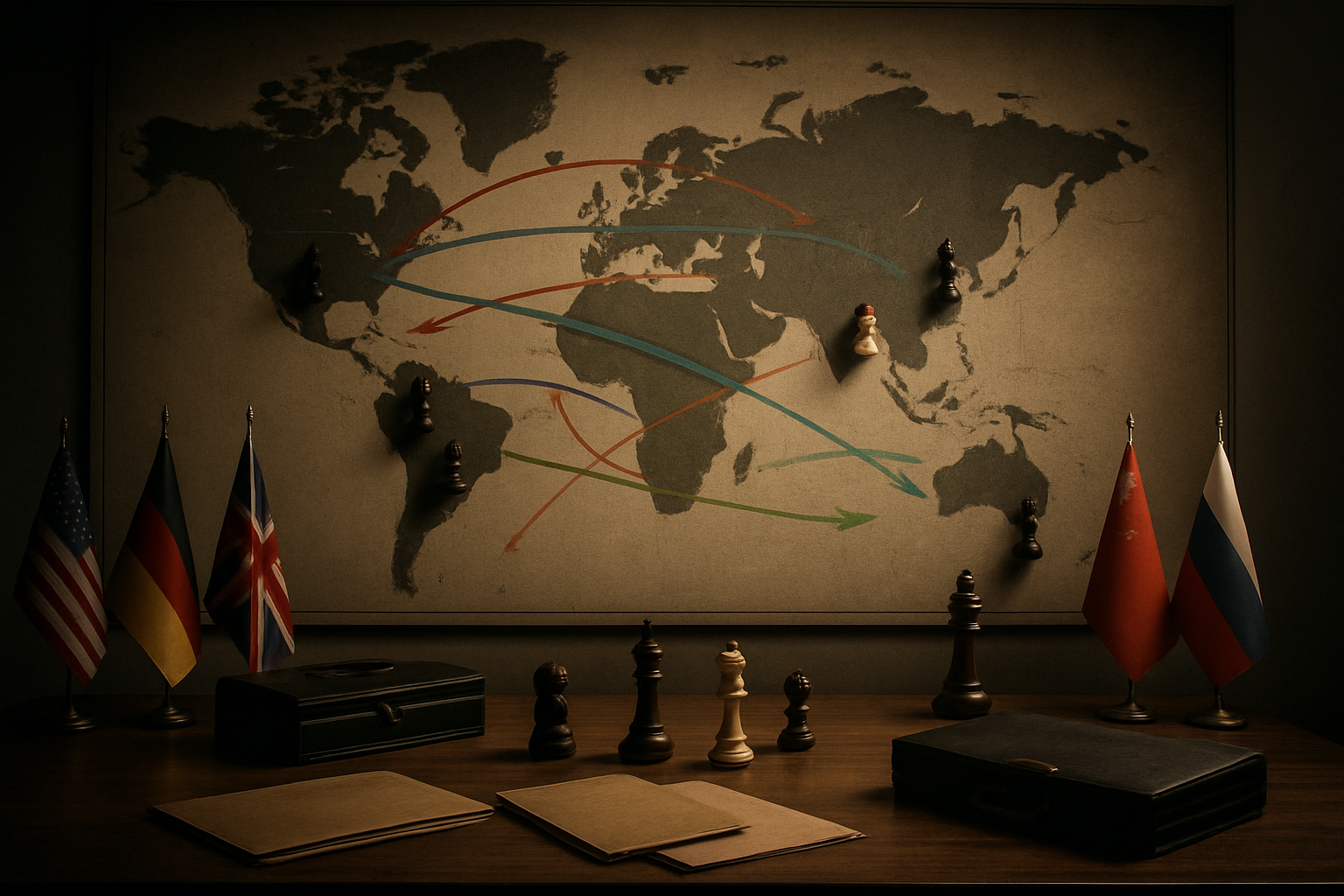
The ongoing US-Iran conflict has significantly disrupted Iran’s ability to maintain its traditional regional proxy network. With Iranian leadership focused on defending the homeland from direct military assault, resources and strategic attention previously dedicated to supporting allied groups across the Middle East have been redirected toward immediate survival needs. The assassination of the second Supreme Leader, Ali Khamenei, and the subsequent leadership transition to Mojtaba Khamenei has created internal instability that further compromises Tehran’s capacity to coordinate with regional partners.
Iran’s strikes against multiple countries, including attacks on American embassies in Saudi Arabia and Dubai, as well as military assets across Bahrain, Cyprus, Iraq, Jordan, Kuwait, Oman, Qatar, Saudi Arabia, and the UAE, demonstrate a shift from proxy warfare to direct confrontation. This strategic pivot represents a fundamental change in Iran’s regional approach, moving away from the traditional proxy model that has defined its Middle Eastern strategy for decades.
The conflict’s expansion has also strained relationships between Iran and some of its traditional allies. Pro-Iranian factions in Iraq have engaged in independent attacks against U.S. military targets, but the coordination appears less systematic than in previous conflicts. The escalation between Israel and Hezbollah, with Israeli strikes on financial institutions and hotels in Beirut displacing over 500,000 Lebanese civilians, suggests that Iran’s proxy network is operating with reduced central coordination and strategic coherence.
Potential for New Middle Eastern Security Architecture
Now that traditional security arrangements have been severely tested by this multi-front war, the potential for establishing a new Middle Eastern security architecture has emerged as a critical consideration. The conflict has exposed the inadequacy of existing security frameworks, with Iran’s ability to strike across multiple nations simultaneously demonstrating the interconnected vulnerability of regional states.
The GCC states’ response to Iranian attacks on their energy infrastructure reveals both their strategic limitations and their potential role in future security arrangements. Tehran’s targeting of Saudi Arabia’s Ras Tanura refinery, Qatar’s LNG facilities at Mesaieed and Ras Laffan, and the UAE’s Ruwais Industrial Complex represents not merely tactical strikes but challenges to the fundamental economic foundations of Gulf Arab prosperity and stability.
Iranian officials have calculated that Gulf Arab monarchies view this confrontation as not “their war” and have limited tolerance for prolonged instability. This assessment has informed Tehran’s belief that leaders with established ties to Trump—including Saudi Crown Prince Mohammed bin Salman, UAE President Mohammed bin Zayed, and Qatar’s Emir Tamim bin Hamad—could leverage their access to advocate for immediate ceasefire arrangements.
The conflict has highlighted the need for new defensive mechanisms, particularly regarding energy infrastructure protection. The vulnerability of critical facilities like refineries, LNG plants, and shipping lanes through the Strait of Hormuz has demonstrated that traditional security guarantees are insufficient for protecting vital economic assets in an era of advanced drone and missile capabilities.
Impact on Nuclear Non-Proliferation Efforts
With this military confrontation intensifying, the implications for global nuclear non-proliferation efforts have become increasingly complex. Iran’s experience with previous acts of aggression during nuclear negotiations—specifically referencing incidents in June 2025 and February of the current year—has reinforced Tehran’s perception that diplomatic processes require backing by operational deterrent capabilities.
The reference content indicates that Iran has learned from past experiences where negotiations proceeded without reliable guarantees, leading to repeated acts of aggression. This historical context suggests that future nuclear negotiations will likely require more robust security assurances and enforcement mechanisms than previous diplomatic frameworks provided.
The current conflict has demonstrated Iran’s capacity to counter advanced military threats, including the destruction of two major U.S. radars in the region. This operational success has highlighted Iran’s defensive readiness and technological capabilities, factors that will significantly influence future nuclear negotiations and non-proliferation discussions.
The international community’s response to this conflict will establish precedents for how nuclear-capable states can expect to be treated during periods of military tension. Iran’s assertion of its inherent right to self-defense, coupled with its demonstrated military capabilities, creates new parameters for nuclear diplomacy that extend beyond traditional non-proliferation frameworks.
Shifts in Global Alliance Structures and Reliability
Previously stable Western alliance structures have begun showing signs of strain under the pressure of this expanding conflict. The reference content identifies the gradual emergence of rifts between the U.S. and its Western and regional allies regarding policies toward Tehran, driven by divergent economic interests, differing security perspectives, and regional rivalries that threaten traditional alliance cohesion.
The roles of non-Western powers—specifically China, India, and Russia—have become increasingly significant variables in international diplomacy, energy markets, and regional stability calculations. These nations’ responses to the conflict will likely reshape global alliance structures and create new patterns of international cooperation and competition.
Market uncertainty and price volatility, with oil prices surging from $73 to $107 per barrel in just ten days, have forced countries and companies dependent on global supply chains to reconsider their economic structures and policy alignments. This economic pressure creates incentives for nations to diversify their security partnerships and reduce dependence on traditional alliance frameworks that may prove unreliable during crises.
The U.S. deployment of three aircraft carrier strike groups—representing approximately 25 percent of its operational carrier fleet—demonstrates both American military commitment and the limitations of power projection in modern conflicts. Despite this substantial presence, the U.S. has been unable to fully secure its regional assets, suggesting that traditional demonstrations of military power may be less effective in contemporary geopolitical contexts.
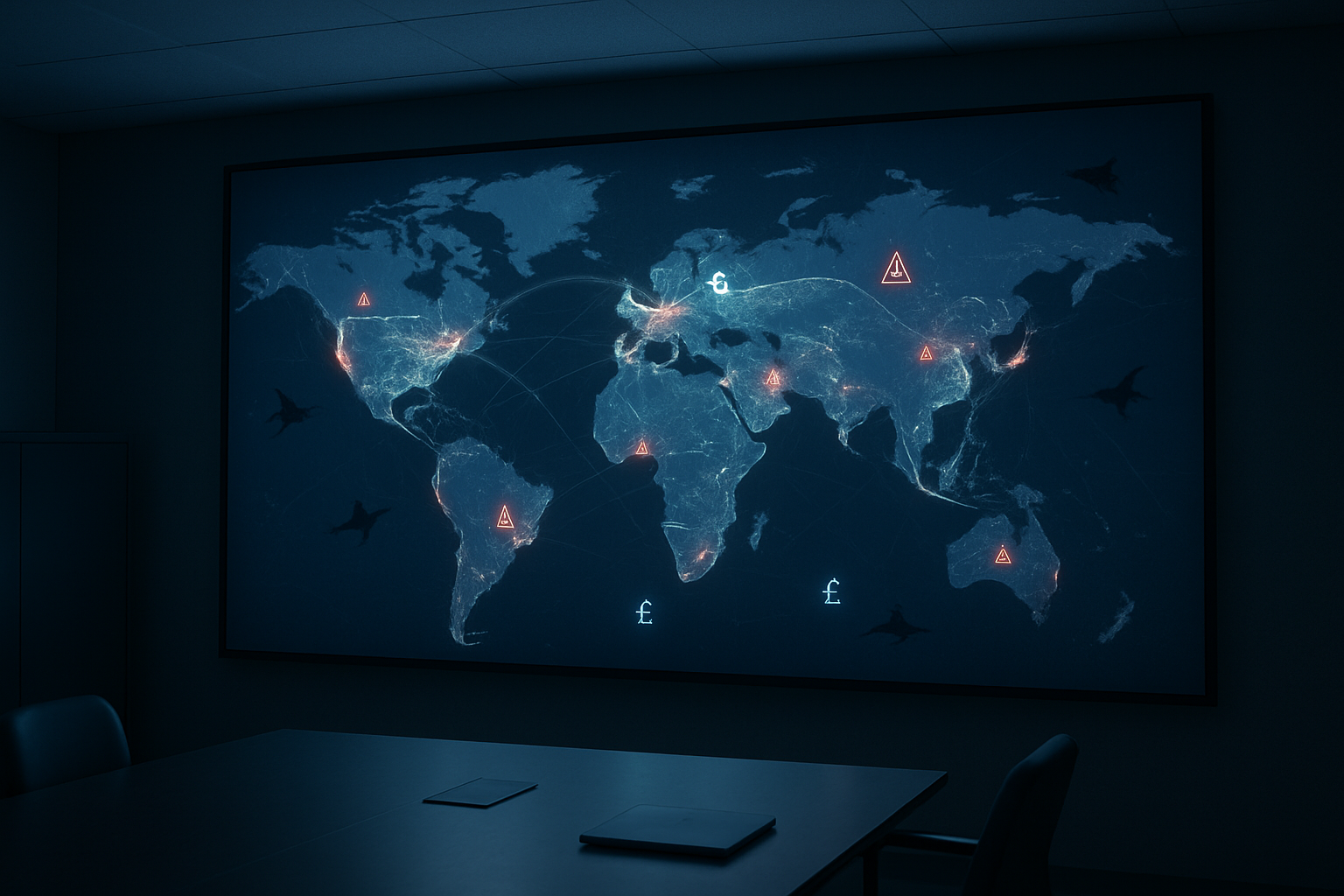
The strikes on Iran have triggered a cascade of global reactions that underscore just how interconnected our world has become. From China’s economic bind and Russia’s exposed weakness as an ally, to Europe’s struggle between legal principles and alliance loyalty, every major power finds itself navigating complex trade-offs. Regional spillovers have already materialized across the Gulf states, while domestic political calculations drive responses from Spain’s defiance to Argentina’s historical grievances with Iranian terrorism.
What emerges most clearly is that modern conflicts cannot be contained within borders—they ripple through oil markets, strain alliance structures, and reshape geopolitical alignments in real time. As nations from Ukraine to Canada recalibrate their positions, the world watches to see whether diplomatic solutions can prevent further escalation or if we’re witnessing the beginning of a broader realignment that will define international relations for years to come. The choices made in the coming weeks by both regional and global powers will determine whether this crisis becomes a turning point toward stability or a catalyst for even greater upheaval.
Continue your learning journey on www. biopharmavesre.com.