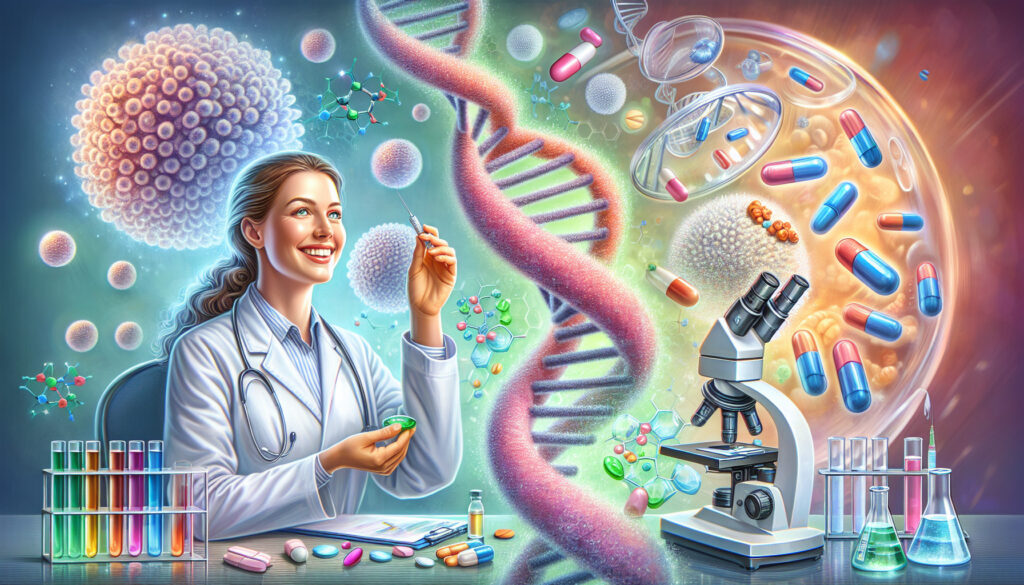
Imagine a world where diseases are predicted and prevented before they strike, where drug discovery happens at lightning speed, and where genetic manipulation is precise and accessible. This isn’t science fiction—it’s the thrilling reality of the AI-driven biotech revolution that’s unfolding before our eyes. 🧬💻
The convergence of artificial intelligence and biotechnology is reshaping the landscape of medical research, drug development, and gene editing. From AI-powered platforms that analyze vast genomic datasets to machine learning models that optimize CRISPR techniques, we’re witnessing a paradigm shift in how we approach some of the most complex challenges in life sciences. But what does this mean for the future of healthcare, agriculture, and even our ability to combat climate change?
In this blog post, we’ll dive deep into the AI-CRISPR frontier, exploring how leading companies are leveraging this powerful combination to push the boundaries of what’s possible. We’ll uncover the transformative impact of AI on biotech research, examine how AI-driven data integration is revolutionizing the industry, and peer into the exciting future applications that await us. Get ready to discover how this technological synergy is not just enhancing biotech—it’s completely reinventing it. 🚀🔬
The AI-CRISPR Revolution in Biotechnology

A. Enhancing gene editing precision and safety
The integration of artificial intelligence (AI) with CRISPR technology has revolutionized gene editing precision and safety. CRISPR, derived from the bacterial immune system, serves as an efficient and versatile gene-editing tool. However, its widespread use has raised concerns about off-target effects and the need for enhanced accuracy.
AI algorithms have significantly improved the capabilities of CRISPR in identifying and targeting specific genetic sequences. Machine learning models, such as DeepCRISPR, assist in designing optimal guide RNAs (gRNAs), which are crucial for precise genome editing. These AI-driven tools can:
- Predict gRNA activity
- Optimize Cas9 variants
- Minimize off-target effects
- Enhance on-target efficacy
The synergy between AI and CRISPR has led to more accurate genome editing, reducing the risk of unintended modifications. This improved precision is particularly important in therapeutic applications, where the safety of genetic interventions is paramount.
B. Overcoming cost and complexity challenges
While CRISPR technology offers immense potential, it faces significant challenges in terms of cost and complexity. The integration of AI is helping to address these issues:
| Challenge | AI Solution |
|---|---|
| High cost (approx. $2 million per patient) | AI-driven optimization of procedures |
| Complexity of procedures (e.g., bone marrow transplants) | Streamlining workflows and enhancing efficiency |
| Data management and analysis | AI-powered data integration and interpretation |
AI is transforming the CRISPR workflow by:
- Automating tasks such as gRNA design and Cas9 variant optimization
- Significantly reducing research time and resources
- Enhancing the management and analysis of vast datasets from multi-omics technologies
- Enabling personalized medicine applications through improved data interpretation
These advancements are making CRISPR technology more accessible and cost-effective, potentially broadening its application in various fields of biotechnology and medicine.
C. Developing novel CRISPR proteins through AI-driven discovery
Artificial intelligence is playing a crucial role in the discovery and development of novel CRISPR proteins, expanding the toolkit for gene editing. AI-driven metagenomic discovery platforms are being used to analyze extensive datasets, identifying new CRISPR proteins with unique properties and capabilities.
Key advancements in this area include:
- Discovery of smaller Cas variants, which can improve delivery methods and expand the range of targetable genes
- Development of CRISPR proteins tailored for specific applications, such as base editing or prime editing
- Identification of CRISPR systems with enhanced specificity and reduced off-target effects
These AI-driven discoveries are not only improving the precision and versatility of CRISPR technology but also addressing some of its limitations. For instance, the development of smaller Cas variants could potentially reduce the cost and complexity of CRISPR therapies by improving delivery methods.
The collaboration between AI and CRISPR is also fostering innovation in other areas:
- Epigenome editing (epi-GED)
- Screening for cancer vulnerabilities
- Studying drug resistance mechanisms
- Engineering chimeric antigen receptor (CAR) T-cells for improved immunotherapies
As we delve deeper into the AI-CRISPR revolution, it’s crucial to understand the key players driving these advancements. In the next section, “Leading Companies at the AI-CRISPR Frontier,” we’ll explore the innovative firms that are at the forefront of this biotechnology revolution, leveraging AI to push the boundaries of CRISPR technology and its applications.
Leading Companies at the AI-CRISPR Frontier

Now that we’ve explored the AI-CRISPR revolution in biotechnology, let’s dive into the leading companies at the forefront of this groundbreaking fusion of technologies.
A. Mammoth Biosciences: AI-powered metagenomic analysis
Mammoth Biosciences, co-founded by Nobel laureate Jennifer Doudna, stands out as a pioneer in the AI-CRISPR landscape. The company leverages an AI-driven metagenomic discovery platform to analyze vast datasets, searching for novel CRISPR proteins that can enhance gene editing capabilities. This innovative approach allows Mammoth to:
- Identify smaller Cas variants
- Improve the precision of gene editing
- Increase the safety and efficacy of CRISPR applications
Mammoth’s collaboration with Regeneron Pharmaceuticals aims to develop CRISPR therapies targeting multiple tissues, showcasing the potential for widespread applications in medicine. Their proprietary DETECTR platform also facilitates CRISPR-based detection, expanding the company’s reach into diagnostics.
B. Profluent: Large language models for CRISPR protein design
Profluent takes a unique approach to AI-CRISPR integration by employing large language models to design new CRISPR proteins. This innovative method offers several advantages:
- Tailored protein design for improved gene editing
- Global collaboration through the OpenCRISPR initiative
- Potential for accelerated discovery of novel CRISPR tools
By leveraging the power of AI in protein design, Profluent is pushing the boundaries of what’s possible in gene editing, potentially leading to more efficient and versatile CRISPR applications.
C. Beam Therapeutics: AI-assisted base editing for precision
Beam Therapeutics specializes in base editing, a precise form of gene modification that focuses on single-base alterations. The company relies heavily on AI to ensure accurate genome modifications, which is crucial for treating diseases with single-letter mutations. Beam’s approach offers several benefits:
| Benefit | Description |
|---|---|
| Precision | Minimizes off-target effects |
| Versatility | Applicable to various genetic disorders |
| Efficiency | Streamlines the editing process |
Beam Therapeutics has multiple candidates in development, including:
- BEAM-101 for sickle cell disease
- BEAM-201 for T-cell leukemias
Both of these candidates are currently in clinical trials, demonstrating the company’s progress in translating AI-assisted base editing into potential therapies.
The integration of AI with CRISPR technologies in these leading companies is driving significant advancements in biotechnology. By enhancing the identification of novel CRISPR proteins, improving the design of guide RNAs, and increasing the precision of gene editing, AI is helping to address the challenges associated with CRISPR technology, such as high costs and procedural complexities.
As we move forward, the synergy between AI and CRISPR is expected to transform various fields by 2025, impacting medicine, agriculture, and even climate change mitigation. Jennifer Doudna envisions applications such as editing crops for climate resilience and modifying livestock to reduce methane emissions.
With this in mind, next, we’ll explore the transformative impact of AI on biotech research, delving deeper into how these technological advancements are reshaping the landscape of scientific discovery and therapeutic development.
Transformative Impact of AI on Biotech Research

Now that we’ve explored the leading companies at the forefront of the AI-CRISPR revolution, let’s delve into the transformative impact of AI on biotech research. This convergence of technologies is reshaping the landscape of scientific discovery and medical advancements.
Accelerating drug discovery and development
AI is revolutionizing the pharmaceutical industry by significantly expediting the drug discovery and development process. Traditional methods of drug development are notoriously time-consuming and expensive, often leaving many diseases without effective treatments. However, AI is changing this paradigm:
- Rapid protein structure prediction: AI platforms like AlphaFold can predict protein structures more efficiently than conventional methods. This breakthrough has the potential to accelerate drug discovery for challenging diseases such as muscular dystrophy and cystic fibrosis.
- Automation of routine tasks: By 2030, AI is expected to enable scientists to automate repetitive tasks, freeing up valuable time for more complex research.
- Data analysis and insights: AI can rapidly generate insights from vast datasets, helping researchers identify promising drug candidates more quickly.
| Traditional Drug Development | AI-Assisted Drug Development |
|---|---|
| Time-consuming | Significantly faster |
| Costly | More cost-effective |
| Limited data analysis | Comprehensive data analysis |
| Manual routine tasks | Automated routine tasks |
Revolutionizing disease prediction and prevention
AI is not only accelerating drug discovery but also transforming our approach to disease prediction and prevention:
- Mental health advancements: AI is being used to analyze brain wave patterns in depressed patients, enabling tailored antidepressant therapies. This personalized approach could revolutionize mental health treatment.
- Addiction monitoring: AI applications can monitor addictive behaviors, allowing for timely interventions to prevent relapses.
- Early disease detection: By analyzing large datasets, AI can identify subtle patterns that may indicate the onset of diseases, enabling earlier interventions and potentially saving lives.
- Personalized medicine: AI facilitates the development of treatments tailored to individual patients’ genetic profiles and disease manifestations, ushering in a new era of precision medicine.
Redefining scientific boundaries and traditional metrics
The integration of AI in biotech research is pushing the boundaries of what’s possible in science:
- Rapid response to emerging threats: AI’s capabilities have been demonstrated in the rapid creation of vaccines in response to emerging viruses, significantly shortening development timelines compared to traditional methods.
- Cross-disciplinary collaboration: AI facilitates collaboration across the biotech industry, allowing stakeholders to share information and create innovative medical tools regardless of geographic boundaries.
- Redefining research efficiency: AI is enhancing data analytics and managing backend tasks, thereby speeding up research and development processes across various sectors, including pharmaceuticals, agriculture, and industrial applications.
- Expanding into new frontiers: AI’s applications extend beyond human health, aiding in genetic engineering and monitoring crop health in agricultural biotech, and enhancing selective breeding processes in animal biotech.
As we move forward to explore AI-driven data integration in biotech, it’s clear that the transformative impact of AI on biotech research is far-reaching. The synergy between AI and biotechnology is not only accelerating scientific discovery but also redefining how we approach complex biological challenges, promising a future of more efficient, personalized, and effective healthcare solutions.
AI-Driven Data Integration in Biotech

Now that we have explored the transformative impact of AI on biotech research, let’s delve into how AI is driving data integration in biotechnology, a crucial aspect of leveraging artificial intelligence for groundbreaking discoveries.
Scispot GLUE: Optimizing data workflows for AI applications
In the rapidly evolving field of biotechnology, the optimization of data workflows is paramount for effective AI applications. Scispot GLUE emerges as a pivotal tool in this domain, addressing the critical need for structured and accessible data. This platform exemplifies the industry’s move towards integrated solutions that streamline the complex data management processes inherent in biotech research.
Scispot GLUE facilitates:
- Data normalization
- Consistent formatting
- Automated data capture and processing
These features align with the industry’s best practices for preparing datasets for machine learning and AI analysis, ensuring that the vast amounts of diverse biotech data are primed for advanced computational techniques.
Centralizing and harmonizing fragmented datasets
The biotechnology sector faces unique challenges due to the diverse range of data types it generates, from genomic sequences to protein structures. AI-driven data integration addresses this complexity by:
- Merging data from various sources
- Implementing data reduction strategies
- Ensuring data validation and integrity
A key approach in this process is the adoption of FAIR principles:
| Principle | Description | Benefit |
|---|---|---|
| Findable | Data is easy to locate | Improves accessibility for AI analysis |
| Accessible | Data can be retrieved by authorized users | Enhances collaborative research |
| Interoperable | Data uses standardized formats | Facilitates integration across platforms |
| Reusable | Data is well-described for repurposing | Maximizes the utility of datasets |
By centralizing and harmonizing fragmented datasets, biotechnology firms can create comprehensive databases that serve as robust foundations for AI-driven insights and discoveries.
Enhancing reproducibility and accelerating discovery processes
AI-driven data integration plays a crucial role in enhancing the reproducibility of biotech research and accelerating discovery processes. This is achieved through:
- Automated checks and anomaly detection
- Implementation of Natural Language Processing (NLP) for data analysis
- Utilization of Robotic Process Automation (RPA) for routine data tasks
These technologies not only reduce manual errors but also significantly speed up data processing and analysis. For instance, in drug discovery, AI can rapidly analyze large datasets to predict drug-target interactions and optimize lead compounds, drastically reducing the time spent on traditional trial-and-error methods.
Moreover, cloud-based solutions like LabKey Biologics LIMS are revolutionizing data management efficiency, particularly in specialized fields such as antibody discovery. By centralizing and connecting various data elements essential for developing biotherapeutics, these platforms are enhancing the speed and accuracy of biotech research.
As we look towards the future applications and potential of AI in biotechnology, it’s clear that robust data integration will continue to be a cornerstone of innovation. The ability to efficiently manage, analyze, and interpret vast amounts of biological data will be crucial in unlocking new possibilities in areas such as synthetic biology, gene editing, and personalized medicine.
Future Applications and Potential

Now that we’ve explored AI-driven data integration in biotechnology, let’s delve into the exciting future applications and potential of AI-CRISPR synergy. This powerful combination is poised to revolutionize various fields, addressing global challenges and paving the way for groundbreaking innovations.
A. Climate-resilient crops and reduced livestock emissions
The integration of AI with CRISPR technology is set to transform agriculture, particularly in developing climate-resilient crops and reducing livestock emissions. AI algorithms can analyze vast genomic datasets to identify key genes responsible for drought tolerance, pest resistance, and other desirable traits. By leveraging this information, CRISPR gene editing can be employed more precisely to create crops that can withstand extreme weather conditions and require fewer pesticides.
In the livestock sector, AI-powered CRISPR applications show promise in reducing methane emissions from cattle. By identifying and modifying specific genes related to methane production in the digestive system, we can potentially decrease the environmental impact of livestock farming.
| Application | AI Role | CRISPR Role | Potential Impact |
|---|---|---|---|
| Crop Resilience | Analyze genomic data to identify target genes | Edit identified genes for desired traits | Increased food security and reduced pesticide use |
| Livestock Emissions | Predict gene modifications for reduced methane production | Implement precise genetic modifications | Lower greenhouse gas emissions from agriculture |
B. Addressing global challenges through AI-CRISPR synergy
The synergy between AI and CRISPR extends beyond agriculture, offering solutions to various global challenges:
- Environmental Conservation: AI can analyze ecosystem data to identify endangered species’ genetic vulnerabilities, while CRISPR can potentially help in genetic rescue efforts.
- Waste Management: AI-driven CRISPR applications could engineer microorganisms for more efficient biodegradation of plastics and other pollutants.
- Sustainable Energy: The combination could lead to the development of more efficient biofuels by optimizing algae and other organisms for increased energy production.
C. Anticipated breakthroughs in medicine and agriculture by 2025
By 2025, we can expect significant advancements in both medicine and agriculture due to the AI-CRISPR revolution:
- Personalized Medicine:
- AI-enhanced CRISPR therapies for a wider range of genetic disorders
- More precise and effective CAR T-cell therapies for solid tumors
- AI-driven drug discovery utilizing CRISPR-edited cell lines for faster development of targeted therapies
- Agricultural Innovations:
- Crops with enhanced nutritional profiles and longer shelf lives
- Drought-resistant varieties of staple crops for food security in climate-vulnerable regions
- Livestock with improved disease resistance and reduced environmental impact
- Biotechnology Advancements:
- AI-optimized CRISPR tools with minimal off-target effects
- Streamlined manufacturing processes for cell and gene therapies, reducing costs and improving accessibility
- Novel biomaterials designed through AI-CRISPR collaboration for various industrial applications
Accelerate research and Development
The convergence of AI and CRISPR is expected to accelerate research and development across these fields. AI’s ability to process and interpret complex genomic data will enhance the precision and efficiency of CRISPR gene editing, leading to safer and more effective applications. This synergy promises to address some of the most pressing challenges in medicine, agriculture, and environmental conservation, potentially revolutionizing our approach to genetic engineering and personalized treatments.
As we look towards 2025, the ethical considerations surrounding these powerful technologies will also come to the forefront. Researchers and policymakers will need to work together to establish guidelines that ensure responsible use of AI-driven CRISPR applications while fostering innovation and progress in biotechnology.

The convergence of AI and biotechnology is ushering in a new era of scientific discovery and innovation. From enhancing CRISPR gene editing techniques to revolutionizing drug discovery processes, AI is transforming the biotech landscape. Companies like Mammoth Biosciences, Profluent, and Beam Therapeutics are at the forefront of this revolution, utilizing AI to improve precision, efficiency, and safety in genetic engineering and therapeutic development.
As we look to the future, the potential applications of AI in biotechnology seem limitless. From developing climate-resilient crops to reducing methane emissions in livestock, the synergy between AI and CRISPR promises to address pressing global challenges. With platforms like Scispot GLUE optimizing data workflows and enhancing accessibility for machine learning applications, biotech companies are poised to accelerate their research and development efforts. This thrilling AI revolution in biotechnology is not just reshaping the industry – it’s paving the way for a healthier, more sustainable future for all.