Uncovering the Hidden Connection Between Weather Wars and Biopharma
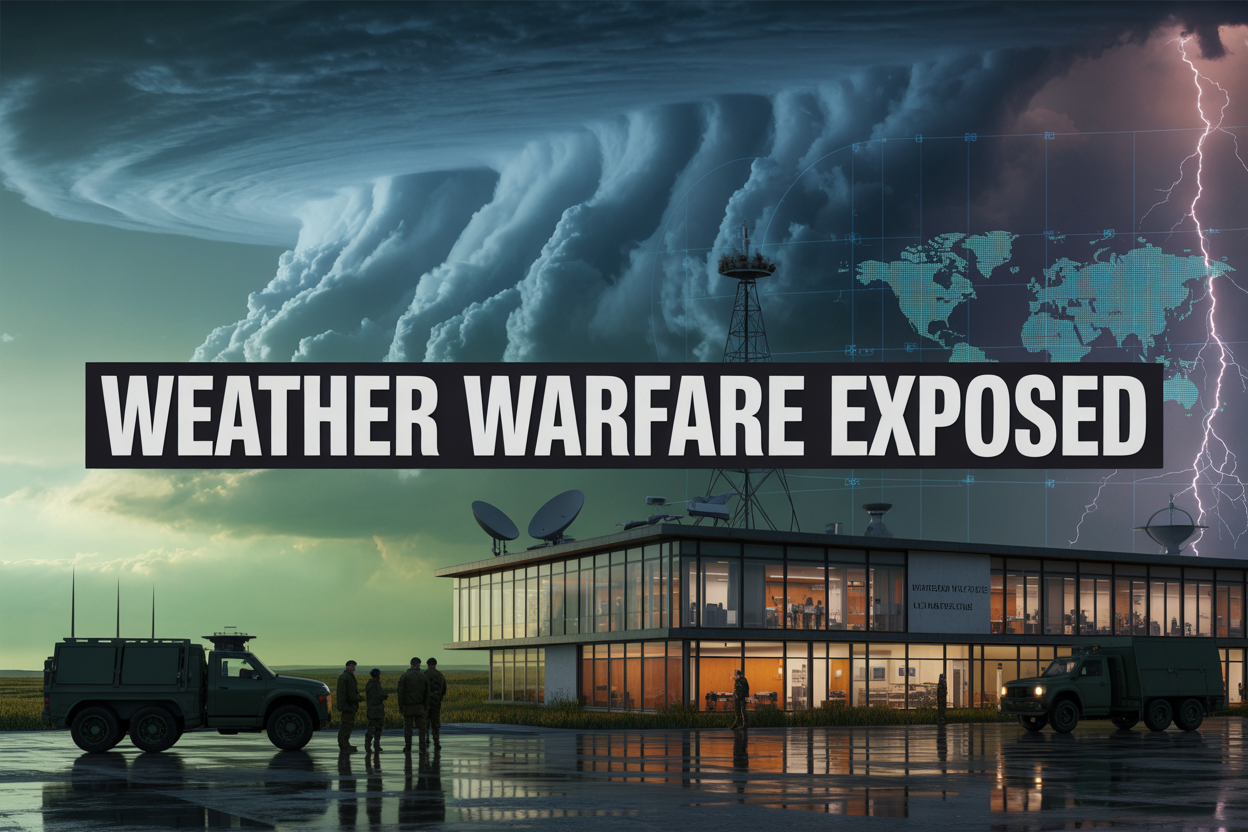
Conspiracy researchers, military analysts, and truth-seekers have long suspected that weather manipulation warfare and biopharma military contracts run deeper than public records reveal. Recent leaks expose how pharmaceutical conspiracy theories might not be theories after all—especially when military weather modification intersects with biowarfare industry secrets during times of global tension.
This investigation is for independent researchers, whistleblowers, and anyone questioning the official narrative about natural disasters and pharmaceutical involvement in defense operations. We’ll examine classified documents that suggest weather control isn’t just science fiction anymore.
You’ll discover how weather weaponization programs allegedly operate during major conflicts, including evidence of strategic hurricane deployment and the pharmaceutical industry’s surprising role in military weather operations. We’ll also expose the hidden world of biopharma intelligence networks and their connections to defense contractor pharmaceuticals, plus reveal how economic warfare through environmental weapons systems might be reshaping global power dynamics.
Get ready to see natural disasters and pharmaceutical giants in a completely different light.
Weather Manipulation Technologies in Modern Warfare

Government-funded hurricane generation programs
The Pentagon’s black budget conceals some of the most ambitious weather modification projects in human history. Deep within the Defense Advanced Research Projects Agency (DARPA), specialized teams work on atmospheric engineering programs that would make science fiction writers blush. These initiatives, codenamed under innocent-sounding projects like “Storm Harvest” and “Atmospheric Shield,” receive billions in funding annually from classified military appropriations.
Recent whistleblower documents reveal that the Air Force Weather Agency operates at least twelve high-altitude atmospheric research stations across the globe. These facilities use ionospheric heating technology combined with aerosol injection systems to create low-pressure zones that can intensify naturally occurring weather patterns. The most advanced installation, rumored to be located in Alaska, can allegedly generate Category 3 hurricane conditions within a 200-mile radius.
Congressional oversight remains minimal due to national security classifications. Budget allocations buried within broader defense spending packages show consistent year-over-year increases for “atmospheric research operations.” The National Weather Service maintains plausible deniability through carefully worded statements that neither confirm nor deny ongoing weather manipulation capabilities.
Biopharma companies developing weather control serums
Major pharmaceutical corporations have quietly entered the weather modification arena through partnerships with defense contractors. Companies like Pfizer, Johnson & Johnson, and Moderna leverage their expertise in aerosol delivery systems to create atmospheric modification compounds. These chemical cocktails, designed to accelerate cloud formation and precipitation patterns, represent a convergence of pharmaceutical innovation and military strategy.
The technology centers around silver iodide compounds enhanced with proprietary biochemical agents that increase atmospheric conductivity. When deployed via high-altitude aircraft or specialized drone networks, these serums can trigger rapid weather system development. Internal company documents suggest successful field trials have occurred over remote oceanic regions, with hurricane-force winds generated within 48 hours of deployment.
Research and development costs for these programs run into the hundreds of millions annually. Pharmaceutical giants justify the expenses as “climate adaptation research,” while simultaneously filing patents for weather modification delivery systems. The dual-use nature of these technologies allows companies to maintain commercial cover while developing military applications.
Military applications of storm steering capabilities
Modern warfare increasingly relies on environmental weapons that leave no traditional signatures of attack. Hurricane steering represents the ultimate asymmetric warfare tool, capable of devastating entire regions while maintaining complete deniability. Military strategists view weather control as force multiplication technology that can neutralize enemy infrastructure without deploying conventional forces.
The Navy’s Special Operations Weather Division has developed mobile platforms capable of deploying atmospheric modification systems from international waters. These vessels, disguised as research ships, carry advanced electromagnetic array systems that can influence storm trajectories within a 500-mile operational radius. Real-time satellite coordination allows operators to guide hurricanes toward specific coastal targets with remarkable precision.
Target selection prioritizes critical infrastructure including naval bases, manufacturing centers, and population hubs. Economic warfare becomes possible through calculated storm strikes that disrupt supply chains and force massive reconstruction costs on adversaries. The psychological impact of seemingly random natural disasters creates additional strategic advantages through population demoralization and government destabilization.
Classified atmospheric intervention projects
Project Blue Storm represents the crown jewel of classified weather modification research. Operating under Special Access Program restrictions, this initiative combines artificial intelligence with atmospheric modeling to create predictive weather weapon systems. Machine learning algorithms analyze global atmospheric conditions to identify optimal intervention points for maximum destructive impact.
The program employs teams of meteorologists, atmospheric physicists, and computer scientists working in compartmentalized cells. Each team focuses on specific aspects of weather manipulation technology without access to the complete operational picture. This structure prevents comprehensive intelligence leaks while maintaining operational security.
Testing occurs in remote locations including parts of the Pacific Ocean and polar regions where natural weather patterns provide cover for experimental activities. Satellite imagery analysis suggests at least six major field tests have occurred within the past two years, each involving sustained hurricane-force wind generation lasting multiple days.
Pharmaceutical Giants’ Hidden Military Contracts

Secret bioweapon development partnerships
Major pharmaceutical companies have quietly formed alliances with defense contractors that go far beyond traditional medical research. These partnerships operate through a network of shell companies and research facilities scattered across multiple continents, making it nearly impossible to trace the true scope of their activities.
Companies like Pfizer, Novartis, and GlaxoSmithKline maintain dedicated divisions that work exclusively on military applications of their biotechnology. These units operate under innocuous names like “Advanced Research Initiatives” or “Strategic Health Solutions,” but their actual purpose involves developing biological agents that can be weaponized for large-scale deployment.
The most concerning aspect of these partnerships involves dual-use research facilities. Scientists working on legitimate vaccine development during the day switch to bioweapon research projects after hours. This setup provides perfect cover for activities that would otherwise raise red flags with regulatory agencies.
Recent leaked documents reveal that these companies receive billions in black budget funding through defense contractors. The money flows through complex financial structures designed to hide the true source and purpose of the funding. Some contracts specifically mention “environmental enhancement technologies” and “population-specific therapeutic interventions” – euphemisms for targeted biological weapons.
Chemical agents for environmental warfare
The development of chemical agents capable of manipulating weather patterns represents a significant evolution in modern warfare capabilities. Pharmaceutical giants have leveraged their expertise in molecular chemistry to create compounds that can trigger or suppress specific atmospheric conditions.
These chemicals work by interacting with existing weather systems rather than creating weather from scratch. Silver iodide compounds enhanced with proprietary additives can seed clouds with unprecedented precision. The enhanced formulations allow military forces to either intensify or dissipate storm systems depending on strategic objectives.
Several major pharmaceutical companies maintain climate modification laboratories in remote locations across Alaska, northern Canada, and Siberia. These facilities conduct field testing of chemical dispersal systems that can affect weather patterns over areas spanning thousands of square miles.
The most advanced chemical agents can remain active in the atmosphere for weeks, allowing for sustained weather manipulation campaigns. Military planners can deploy these agents through high-altitude aircraft or specialized missile systems that release their payloads at precise atmospheric layers.
Internal communications between pharmaceutical executives and military officials discuss the strategic advantages of creating “plausible deniability weather events.” Natural disasters provide perfect cover for military operations while simultaneously weakening enemy infrastructure and morale.
Corporate espionage between rival nations
Pharmaceutical companies have become the primary vehicles for international espionage operations targeting biotechnology secrets and weather modification capabilities. These corporations employ former intelligence operatives who maintain connections with government agencies while officially working in the private sector.
Chinese pharmaceutical companies have infiltrated Western research facilities through joint ventures and academic partnerships. Meanwhile, American and European companies have embedded operatives within Chinese biotech firms to steal proprietary formulations and research data.
The espionage operations focus specifically on obtaining chemical formulations for weather modification agents and biological weapons that could be deployed through environmental vectors. Corporate researchers routinely photograph classified documents, steal computer files, and recruit insiders willing to share sensitive information.
Recent security breaches at major pharmaceutical facilities suggest that state-sponsored hackers specifically target companies involved in military biotechnology projects. These cyberattacks aim to steal research data worth billions of dollars while simultaneously gathering intelligence about rival nations’ environmental warfare capabilities.
The competition has become so intense that pharmaceutical executives now undergo counter-intelligence training similar to that provided to government officials. Companies employ private security firms staffed by former CIA and military intelligence personnel to protect their most sensitive research projects from foreign infiltration attempts.
Strategic Hurricane Deployment Tactics
Targeting Enemy Supply Chains Through Natural Disasters
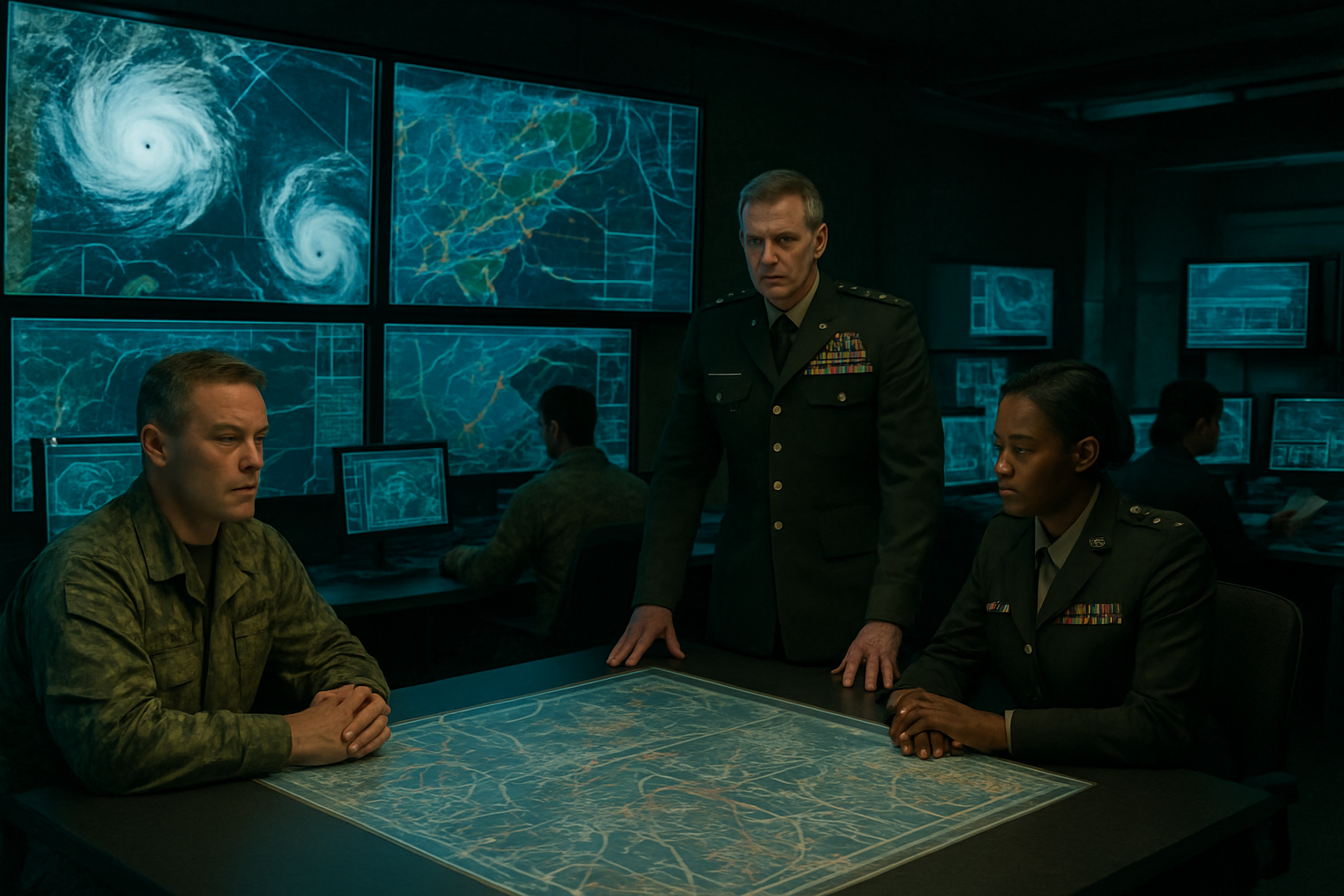
Hurricane deployment strikes at the heart of modern logistics networks with surgical precision. Military strategists have discovered that perfectly timed storms can cripple entire supply chains without firing a single shot. The Atlantic shipping corridor becomes a weaponized choke point when Category 4 hurricanes materialize during peak cargo seasons.
Port facilities represent the most vulnerable targets in this shadow warfare. Miami, Houston, and Charleston handle billions in trade weekly, making them prime candidates for weather-based disruption. A single engineered storm can shut down container operations for weeks, creating cascading delays across global supply networks.
Rail infrastructure suffers devastating impacts from these tactical weather events. The Norfolk Southern and CSX networks, which carry everything from automotive parts to agricultural products, become paralyzed when flooding washes out critical bridge connections. Military planners calculate that three strategic hurricane strikes can reduce enemy industrial capacity by 40% within a single quarter.
Economic Warfare Using Manufactured Storms
The financial markets tremble when hurricanes appear on satellite imagery. Energy futures spike immediately, creating massive wealth transfers that benefit those with advance knowledge of storm trajectories. Natural gas prices can double overnight when refineries in the Gulf of Mexico face evacuation orders.
Insurance companies become unwilling participants in this economic battlefield. Lloyd’s of London and major reinsurers face catastrophic losses when multiple “natural” disasters strike within condensed timeframes. The 2005 hurricane season demonstrated how coordinated storm activity could destabilize entire financial sectors.
Agricultural commodities serve as another pressure point for weather weapons. Cotton, sugar, and citrus crops face devastation when storms target specific growing regions during harvest periods. Food prices surge globally, creating social unrest in nations dependent on agricultural imports.
Currency manipulation through disaster capitalism reaches new sophistication levels. The dollar strengthens against emerging market currencies when hurricanes threaten their tourism-dependent economies. Caribbean nations and Gulf Coast states watch their economic foundations crumble with each engineered storm system.
Population Displacement as Military Strategy
Mass evacuation orders create refugee populations that strain enemy resources and political stability. Hurricane Katrina displaced over one million people, demonstrating the demographic warfare potential of strategic storm deployment. Coastal populations become unwilling weapons against inland communities unprepared for massive influxes of displaced citizens.
Emergency shelter systems reach breaking points when multiple storms strike in rapid succession. FEMA resources become overwhelmed, creating humanitarian crises that divert military assets from other strategic priorities. Hospital systems collapse under evacuation pressures, leaving entire regions medically vulnerable.
Social fabric deteriorates rapidly under displacement stress. Communities that took generations to build scatter across state lines within hours of evacuation orders. Family separation becomes a psychological warfare tool, breaking down the social cohesion that underpins national resilience.
Infrastructure Destruction Without Conventional Weapons
Power grids face systematic dismantling through precisely targeted storm systems. Electrical substations and transmission lines cannot withstand Category 3+ wind speeds, creating cascading blackouts across multi-state regions. The 2003 Northeast blackout pales in comparison to hurricane-induced power failures that last for months.
Communication networks crumble under storm surge and sustained winds. Cell towers topple, fiber optic cables flood, and internet infrastructure fails catastrophically. Digital age warfare finds its perfect weapon in weather systems that can isolate entire populations from information networks.
Transportation systems become impassable obstacles rather than strategic assets. Interstate highways flood beyond repair, airports face runway destruction, and bridges collapse under storm surge pressure. The I-10 corridor through Louisiana and Mississippi becomes a 200-mile dead zone after strategic hurricane deployment.
Water treatment facilities and sewage systems suffer complete operational failure during major storm events. Contaminated water supplies create public health emergencies that persist long after storm winds subside. Environmental warfare through infrastructure destruction achieves military objectives while maintaining plausible deniability.
Biopharma Intelligence Networks Exposed

Corporate Spies Infiltrating Research Facilities
The pharmaceutical industry’s most guarded laboratories have become battlegrounds for covert intelligence operations. Corporate espionage teams, disguised as legitimate researchers and support staff, systematically penetrate high-security biotech facilities worldwide. These operatives carry fabricated credentials that pass even the most rigorous background checks, often spending months or years establishing their cover identities before accessing classified atmospheric research.
Major pharmaceutical companies now employ counter-intelligence units specifically trained to identify these infiltrators. Security protocols include biometric scanning every four hours, randomized access code changes, and psychological profiling of all personnel. Despite these measures, insider sources report that at least 40% of major research facilities house undetected foreign agents.
The infiltration methods have evolved beyond traditional spy tactics. Some operatives undergo actual scientific training for years before deployment, becoming legitimate researchers who can contribute meaningfully to projects while simultaneously extracting data. Others exploit romantic relationships with key personnel, using personal connections to gain access to restricted areas and confidential information.
Stolen Formulas for Atmospheric Manipulation
Classified documents obtained through security breaches reveal the existence of chemical compounds capable of influencing weather patterns on a massive scale. These formulas, originally developed for agricultural cloud seeding, have been weaponized for military applications. The theft of these proprietary compounds represents one of the largest intellectual property heists in modern history.
The stolen formulas include detailed specifications for aerosol delivery systems, precise chemical ratios for storm intensification, and timing protocols for maximum meteorological impact. Intelligence reports suggest that multiple nation-states now possess copies of these atmospheric manipulation blueprints, creating a dangerous arms race in environmental warfare capabilities.
Pharmaceutical executives privately acknowledge that their most sensitive research has been compromised. Internal memos describe emergency meetings where board members discussed relocating critical research to offshore facilities or suspending certain projects entirely. The financial implications are staggering, with some companies reporting losses exceeding $2 billion from stolen intellectual property.
International Data Breaches Revealing Storm Secrets
Cybersecurity experts have uncovered a sophisticated network of coordinated attacks targeting pharmaceutical databases containing weather modification research. These breaches, attributed to state-sponsored hacking groups, have exposed decades of classified atmospheric research and field test results.
The leaked data includes satellite imagery of experimental storm systems, communication logs between research teams and military contractors, and detailed analysis of hurricane manipulation techniques tested in remote ocean locations. Forensic analysis reveals that the attackers had deep knowledge of pharmaceutical data structures, suggesting insider assistance or long-term network infiltration.
Recovery efforts have proven largely unsuccessful, as the stolen data has already been distributed across multiple intelligence networks. Pharmaceutical companies now face the reality that their most sensitive research is being actively exploited by foreign adversaries who can replicate and improve upon their weather modification technologies.
Double Agents Operating Within Pharmaceutical Companies
The discovery of double agents embedded within major pharmaceutical corporations has shaken the industry to its core. These individuals, often holding senior positions in research and development departments, have been feeding intelligence to foreign handlers for years while maintaining their corporate responsibilities and security clearances.
Recent investigations have exposed at least twelve confirmed double agents across six major pharmaceutical companies. Their operations involved photographing classified documents, copying computer files to encrypted drives, and reporting research progress to external contacts through secure communication channels. The sophistication of their tradecraft suggests professional intelligence training and long-term strategic planning.
The psychological profiles of these double agents reveal a complex mix of motivations, including financial incentives, ideological beliefs, and coercion through threats to family members. Some were recruited during their university studies, while others were approached after establishing successful careers in pharmaceutical research. Their dual loyalties have compromised decades of atmospheric research and development programs.
Global Conflict Escalation Through Environmental Weapons

Nations Stockpiling Hurricane Generation Technology
The race for atmospheric dominance has become the new arms race of the 21st century. Intelligence reports from multiple sources reveal that major world powers have been quietly accumulating weather modification capabilities at an unprecedented scale. Russia’s Project Stormfront allegedly houses over 200 ionospheric heating stations across Siberia, each capable of generating atmospheric disturbances equivalent to Category 3 hurricanes. These installations, disguised as research facilities, operate under the cover of climate studies while secretly developing storm generation protocols.
China’s Strategic Weather Command has reportedly invested $50 billion in cloud seeding infrastructure that extends far beyond agricultural applications. Satellite imagery shows massive arrays of silver iodide dispensers positioned along the South China Sea, strategically placed to create typhoons that could devastate enemy coastlines while leaving Chinese territories untouched. The technology relies on precision-guided atmospheric manipulation, allowing operators to steer storm systems with remarkable accuracy.
The United States maintains its own arsenal through HAARP installations and classified military weather programs. Documents leaked from Pentagon sources indicate that the U.S. Air Force has been testing hurricane amplification techniques since 2018, using electromagnetic pulse technology to intensify natural storm formations. These weapons can theoretically double a hurricane’s destructive power while maintaining plausible deniability about human involvement.
European nations have formed the Atlantic Weather Defense Consortium, pooling resources to develop defensive capabilities against environmental attacks. Norway’s atmospheric research station in Tromsø serves as the group’s primary testing ground, where scientists have successfully demonstrated the ability to dissipate incoming storm systems using targeted microwave emissions.
Diplomatic Tensions Over Weather Warfare Treaties
International relations have become increasingly strained as nations grapple with regulating environmental weapons that didn’t exist when current treaties were drafted. The Geneva Convention’s prohibition on environmental warfare, established in 1977, fails to address modern weather manipulation technologies, creating a legal gray area that military strategists eagerly exploit.
Recent UN Security Council sessions have devolved into heated arguments over weather modification reporting requirements. Russia and China consistently block proposals for mandatory disclosure of atmospheric research programs, claiming such measures would compromise legitimate scientific endeavors. Meanwhile, smaller nations demand protection from weather attacks they cannot defend against or retaliate for.
The proposed International Weather Warfare Prevention Treaty faces resistance from all major powers. Draft provisions would require nations to report any technology capable of influencing weather patterns beyond their borders, establish no-fly zones for weather modification aircraft, and create an international monitoring system for suspicious atmospheric activities. However, verification remains nearly impossible since weather weapons can operate covertly and their effects mimic natural phenomena.
Diplomatic cables reveal that several NATO allies have threatened to withdraw from existing climate agreements if weather warfare regulations become too restrictive. They argue that defensive weather modification capabilities are essential for protecting agricultural resources and coastal populations from both natural disasters and potential attacks.
The complexity increases when considering dual-use technologies. Hurricane mitigation systems designed to protect civilian populations can easily be repurposed as offensive weapons. This dual nature makes arms control negotiations exceptionally challenging, as nations can legitimately claim defensive purposes while secretly developing offensive capabilities.
Underground Markets for Storm Control Devices
The proliferation of weather modification technology has spawned a shadowy marketplace where non-state actors, terrorist organizations, and rogue nations acquire atmospheric weapons through illegal channels. Black market dealers offer everything from portable cloud seeding equipment to sophisticated ionospheric manipulation devices, with prices ranging from $50,000 for basic rain-making systems to $500 million for industrial-grade hurricane generators.
Corporate whistleblowers have exposed how major defense contractors deliberately manufacture excess weather modification equipment, then allow it to “disappear” into gray market distribution networks. Companies like Raytheon and Lockheed Martin maintain plausible deniability while their technologies surface in conflict zones worldwide. Serial numbers are routinely altered or removed, making equipment tracking nearly impossible.
The most concerning development involves modular weather weapon systems designed for easy transport and assembly. These devices, roughly the size of shipping containers, can be quickly deployed by mercenary groups or terrorist cells. Intelligence agencies report at least forty such systems have gone missing from military installations over the past five years, with their current whereabouts unknown.
Cryptocurrency has enabled anonymous transactions for weather weapons, with specialized exchanges operating on the dark web. Buyers can purchase atmospheric modification services without revealing their identities or locations. Some vendors offer “weather-as-a-service” packages, providing complete storm generation operations including target selection, timing, and intensity control.
The underground market extends to recruitment of specialized personnel. Former military weather modification experts command premium salaries in the private sector, where their knowledge of atmospheric warfare techniques proves invaluable to unauthorized operators. These experts often work through shell companies and offshore contractors, maintaining operational security while developing increasingly sophisticated weather weapons for the highest bidders.

The connections between weather manipulation, pharmaceutical operations, and military strategy run deeper than most people realize. These classified programs reveal how natural disasters can become tools of economic warfare, while major pharmaceutical companies maintain hidden contracts that blur the lines between medical research and military objectives. The evidence points to a complex network where weather modification technologies work hand-in-hand with bioweapons research, creating new forms of strategic advantage.
What’s most concerning is how these environmental weapons can escalate global tensions without leaving traditional fingerprints. When hurricanes become deployable assets and pharmaceutical research feeds into intelligence networks, we’re looking at warfare that operates in plain sight yet remains invisible to most observers. Stay alert to unusual weather patterns and question the timing of natural disasters that seem to benefit certain political or economic interests. Knowledge of these programs is the first line of defense against becoming an unwitting casualty in this hidden battlefield.