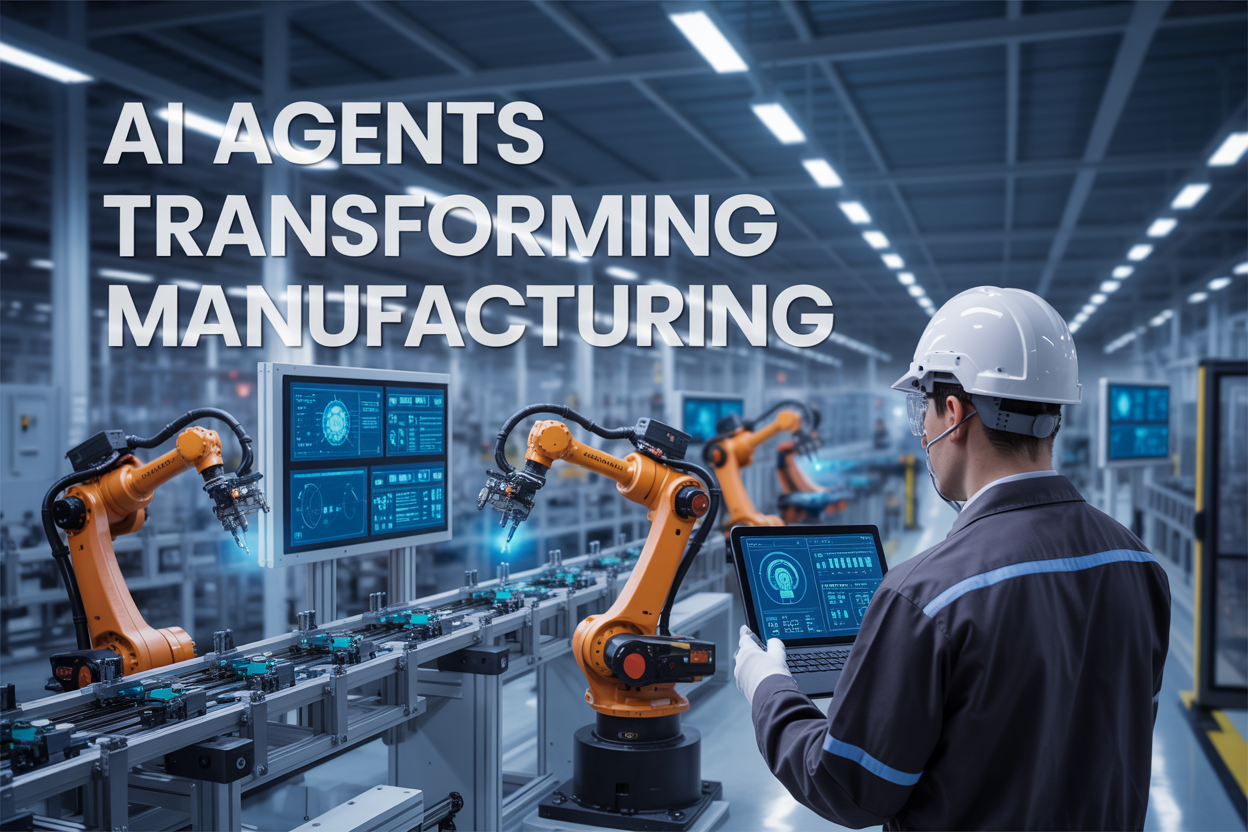
Powerful AI agents are transforming how manufacturers work — turning manual, time-consuming tasks into automated processes that save money and boost efficiency. Manufacturing leaders across operations, IT, sales, and service are seeing real results from AI implementation strategy manufacturing that delivers measurable improvements in weeks, not years.
This guide is for executives, operations managers, IT leaders, and department heads who need to understand how intelligent manufacturing systems can solve today’s biggest operational challenges. You’ll discover where AI agents deliver the fastest ROI and how to implement them without disrupting your current workflows.
We’ll cover how AI agents transform key manufacturing operations — from supply chain exception handling to quality control automation — and explore proven implementation strategies that minimize risk while maximizing results. You’ll also learn how early adopters are gaining competitive advantages through smart manufacturing technology that works alongside existing systems like ERP and MES platforms.
AI Agents Transform Manufacturing Operations Beyond Traditional Automation
AI agents act as digital teammates that listen, decide, and execute tasks autonomously
AI agents in manufacturing represent a fundamental shift from traditional automation systems, functioning as intelligent software programs that operate with unprecedented autonomy. These sophisticated digital teammates leverage advanced algorithms and machine learning capabilities to perform specific tasks and make critical decisions without explicit human intervention. Unlike conventional automation that follows predetermined rules, AI agents continuously process vast amounts of data from sensors, machines, and enterprise resource planning systems to make data-driven decisions in real-time.
The autonomous nature of these intelligent manufacturing systems enables them to operate 24/7, tirelessly monitoring and analyzing production data to ensure consistent performance and quality. They possess the unique ability to identify patterns, trends, and relationships within manufacturing processes, continuously learning and improving over time. This self-improving capability allows AI agents to make increasingly accurate predictions and recommendations based on both historical data and real-time information.
What distinguishes AI agents as digital teammates is their capacity to understand context, adapt to changing conditions, and execute complex workflows independently. They can analyze historical maintenance records, equipment sensor data, and production schedules to predict potential equipment failures and maintenance needs. This proactive approach enables manufacturers to deliver preventive service, minimizing unplanned downtime and maximizing equipment uptime through intelligent automation.
Unlike chatbots, AI agents complete workflows and integrate with existing systems
While chatbots are designed primarily for conversational interactions, AI agents for manufacturing automation represent a far more sophisticated and comprehensive solution. These intelligent manufacturing systems go beyond simple question-and-answer exchanges to execute complete end-to-end workflows across multiple manufacturing operations. They seamlessly integrate with existing manufacturing systems and software, creating a unified ecosystem that enhances overall operational efficiency.
The integration capabilities of AI agents enable them to connect with various data sources throughout the manufacturing environment. They gather information from sensors, machines, quality control systems, and inventory management platforms to provide a comprehensive view of the entire production process. This deep integration allows AI agents to coordinate activities across different departments and systems, ensuring optimal workflow execution.
AI agents demonstrate their workflow completion capabilities through various manufacturing applications. They can automatically adjust production schedules based on real-time demand forecasting, optimize inventory levels by analyzing sales data and stock movements, and initiate predictive maintenance tasks when equipment performance indicators suggest potential issues. These automated manufacturing processes eliminate the need for manual intervention in routine operations, allowing human workers to focus on higher-value activities that require creativity and strategic thinking.
Furthermore, AI agents can control assets remotely, such as adjusting production levels or ordering new materials, based on their data analysis and predictions. This comprehensive workflow management reduces the need for human intervention and allows for quicker, more accurate decision-making across the entire manufacturing operation.
Real-time response capabilities replace reactive data analysis approaches
The transformation from reactive to proactive manufacturing operations represents one of the most significant advantages of AI-driven production optimization. Traditional manufacturing approaches rely on analyzing historical data after events have occurred, leading to delayed responses and missed optimization opportunities. AI agents fundamentally change this paradigm by providing continuous real-time monitoring and immediate response capabilities.
These intelligent systems continuously monitor manufacturing processes in real-time, identifying deviations from standard operating procedures or potential issues as they emerge. Through advanced machine learning algorithms, AI agents can detect quality issues, equipment anomalies, and production inefficiencies instantly, enabling immediate corrective actions. This real-time response capability minimizes the production of faulty products, reduces waste, and enhances overall product quality.
The real-time capabilities extend beyond simple monitoring to include predictive analytics that anticipate future conditions. AI agents analyze vast amounts of data in real-time, providing valuable insights to improve production processes and identify areas for optimization. This immediate data processing speeds up decision-making while minimizing errors and reducing waste, leading to significant cost savings.
Real-time asset telemetry summaries generated by AI agents provide comprehensive insights that highlight performance trends and potential issues as they develop. These AI-driven insights enable proactive maintenance and optimization strategies, reducing downtime and extending machinery lifespan. By leveraging real-time data analysis, manufacturers can respond quickly to unexpected changes in demand or supply, avoiding potential disruptions in their operations and maintaining competitive advantages in dynamic market conditions.
The shift from reactive to real-time response capabilities represents a fundamental transformation in how manufacturing operations are managed, moving from damage control to prevention and optimization.
Strategic Implementation Areas Deliver Immediate Manufacturing Value
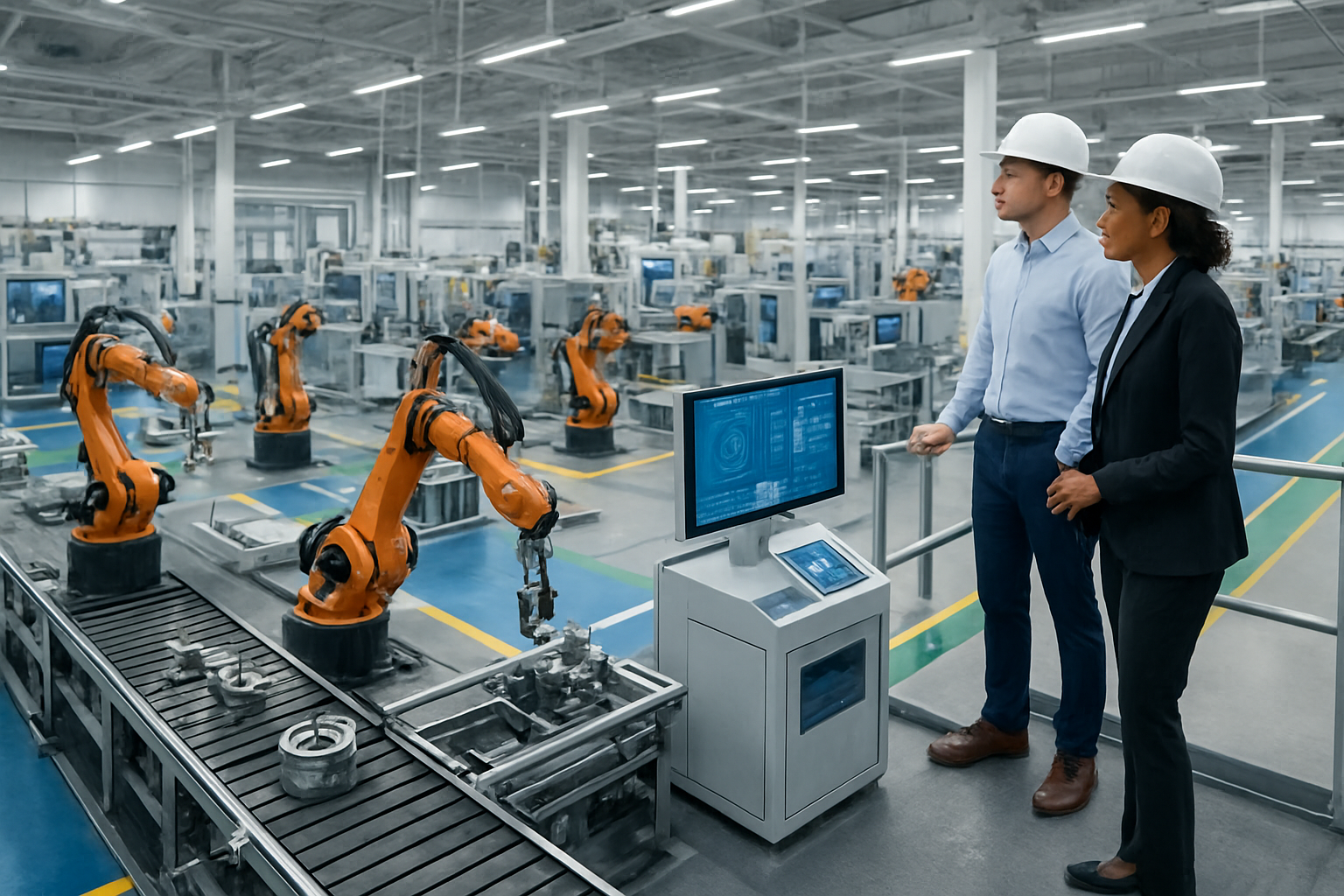
Shop floor quality control automates root cause analysis and corrective actions
AI-powered vision systems represent one of the most impactful applications of artificial intelligence manufacturing operations on the production floor. These intelligent manufacturing systems can identify product defects in real-time during production, catching quality issues before products reach customers. This capability fundamentally transforms traditional quality control processes by moving from reactive inspection to proactive defect prevention.
The implementation of AI agents in manufacturing quality control goes beyond simple defect detection. Advanced machine learning algorithms analyze historical work orders, production data, and defect patterns to perform automated root cause analysis. When quality issues arise, these systems can trace the problem back to specific equipment, materials, or process parameters, eliminating the time-consuming manual investigation traditionally required.
Smart manufacturing technology enables corrective actions to be triggered automatically once root causes are identified. For example, when AI systems detect a pattern of defects linked to specific equipment settings, they can automatically adjust machine parameters or alert operators to make necessary changes. This automated response capability significantly reduces the time between defect detection and correction, minimizing waste and improving overall product quality.
Supply chain exception handling prevents delays through predictive risk management
Modern supply chain operations face unprecedented volatility due to rapidly changing trade policies and economic uncertainty. AI-driven production optimization addresses these challenges through sophisticated demand forecasting capabilities that analyze historical sales data alongside current market conditions to optimize inventory levels.
Predictive AI systems excel at identifying potential supply chain disruptions before they occur. By processing vast amounts of data from multiple sources—including supplier performance metrics, transportation delays, and market indicators—these intelligent systems can flag potential exceptions and recommend proactive measures. This predictive approach ensures manufacturers produce the right quantities to meet future demand without incurring excess inventory costs.
The automation of exception handling extends beyond simple alerts. AI agents can automatically trigger alternative sourcing strategies, adjust production schedules, or initiate expedited shipping when potential delays are detected. This autonomous decision-making capability transforms supply chain management from a reactive process to a proactive, self-optimizing system that maintains operational continuity even during disruptions.
Commercial processes streamline quote-to-cash workflows and customer relationship management
Automated manufacturing processes powered by AI significantly accelerate commercial operations by streamlining quote-to-cash workflows. Machine learning algorithms can analyze historical pricing data, customer requirements, and market conditions to generate accurate quotes in real-time, reducing the time and manual effort traditionally required for complex pricing decisions.
AI implementation strategy in commercial processes focuses on enhancing customer relationship management through intelligent data analysis. These systems can process customer interaction data, purchase history, and market trends to identify opportunities for upselling, cross-selling, or proactive customer service interventions. This capability enables sales teams to focus on high-value activities while AI handles routine data analysis and relationship monitoring.
The integration of AI into customer-facing processes also improves order management and fulfillment tracking. Intelligent systems can automatically update customers on order status, predict delivery times based on real-time production data, and proactively communicate potential delays or changes. This level of automation enhances customer satisfaction while reducing the administrative burden on sales and customer service teams.
Financial operations automate invoice processing and month-end reconciliations
Financial operations represent a critical area where industrial AI solutions deliver immediate value through process automation. AI systems can automatically process invoices by extracting relevant data, validating against purchase orders, and routing for approval based on predefined business rules. This automation reduces manual processing time and minimizes errors associated with data entry.
Month-end reconciliations, traditionally one of the most time-consuming financial processes, become significantly more efficient through AI automation. Machine learning algorithms can match transactions across multiple systems, identify discrepancies, and flag exceptions for human review. This automated approach reduces the time required for month-end close while improving accuracy and consistency.
The implementation of AI in financial operations extends to cash flow forecasting and budget variance analysis. These systems analyze historical financial data, current operational metrics, and market conditions to provide accurate predictions of cash flow patterns. This predictive capability enables better financial planning and helps identify potential issues before they impact operations, supporting more informed decision-making across the organization.
Departmental Leaders Gain Measurable Performance Improvements

Sales teams achieve sharper forecasting and better visibility into rep performance
AI agents transform sales operations by providing manufacturing companies with unprecedented visibility into customer demand patterns and sales representative effectiveness. By analyzing historical sales data, market trends, and consumer behavior, AI-powered forecasting tools help sales teams accurately align production schedules with market demand, minimizing the risk of overproduction and stockouts. This enhanced forecasting capability reduces errors by up to 50% in supply chains, enabling sales leaders to make data-driven decisions about inventory allocation and territory management.
Manufacturing sales teams leverage AI to optimize product distribution across multiple locations, ensuring each sales channel maintains adequate stock levels without cluttering storage facilities with excess inventory. The intelligent systems analyze complex variables including seasonal fluctuations, regional preferences, and competitive dynamics to predict demand with remarkable precision. Sales representatives gain access to real-time insights about customer preferences and buying patterns, empowering them to tailor their approach and improve conversion rates.
Customer service leaders enable faster resolutions through intelligent request routing
Customer service departments in manufacturing organizations experience dramatic improvements through AI-driven request routing and resolution systems. These intelligent systems analyze incoming customer inquiries, automatically categorizing them based on complexity, urgency, and required expertise before routing them to the most qualified service representatives. This strategic routing reduces resolution times and improves customer satisfaction by ensuring specialized knowledge aligns with specific technical challenges.
AI agents continuously monitor service interactions, identifying patterns in customer complaints and product issues that might indicate broader manufacturing defects or quality concerns. This proactive approach enables customer service leaders to address systemic problems before they escalate into costly recalls or widespread dissatisfaction. The systems also provide real-time support to service representatives, delivering instant access to product specifications, troubleshooting guides, and resolution protocols directly within their workflow.
IT leaders transform service management with automated incident handling
Manufacturing IT departments harness AI agents to revolutionize service management through automated incident detection, classification, and resolution. These intelligent systems continuously monitor equipment performance, network connectivity, and software applications, identifying potential issues before they impact production operations. By analyzing vast amounts of operational data, AI agents can predict when systems might fail and automatically initiate preventive measures or maintenance procedures.
The automated incident handling capabilities extend beyond simple problem identification to include intelligent troubleshooting and resolution recommendations. IT leaders gain comprehensive visibility into system performance metrics, enabling them to optimize resource allocation and prioritize critical infrastructure maintenance. AI-driven service management reduces unexpected downtime by 35% to 45%, while simultaneously extending the lifespan of manufacturing equipment and technology infrastructure.
Purchasing teams optimize inventory levels and demand planning accuracy
Purchasing departments leverage AI agents to achieve optimal inventory management through sophisticated demand forecasting and supplier performance analysis. These systems analyze historical purchasing data, supplier reliability metrics, and market conditions to predict material requirements with exceptional accuracy. Manufacturing companies using AI-driven inventory management can reduce inventory levels by 35% while improving service levels by up to 65%, creating significant cost savings and operational efficiency gains.
AI agents provide purchasing teams with real-time insights into supplier performance, identifying potential bottlenecks or quality issues before they disrupt production schedules. The systems automatically adjust procurement schedules based on production demands, seasonal variations, and supply chain dynamics. This intelligent approach to purchasing helps manufacturers maintain lean inventory levels while ensuring adequate raw material availability for uninterrupted production operations.
Product managers detect issues early and gain market insight from customer feedback
Product management teams utilize AI agents to analyze customer feedback, warranty claims, and product performance data to identify quality issues and market opportunities early in the product lifecycle. These intelligent systems can achieve up to 90% accuracy in detecting potential defects by analyzing patterns in customer complaints, service requests, and return data. Product managers gain valuable insights into product performance in real-world applications, enabling them to make informed decisions about design improvements and new product development.
AI-powered analysis of customer feedback provides product managers with deep market insights, revealing emerging trends, unmet needs, and competitive advantages. The systems continuously monitor social media mentions, review platforms, and direct customer communications to identify sentiment changes and product perception shifts. This comprehensive market intelligence enables product managers to adapt quickly to changing customer preferences and maintain competitive positioning in dynamic manufacturing markets.
Proven Implementation Strategy Minimizes Risk While Maximizing Results

Phased approach progresses from copilot assistance to autonomous agent actions
The most effective AI implementation strategy manufacturing operations involves a carefully structured progression from human-assisted AI to fully autonomous systems. This phased approach begins with AI agents serving as copilot assistance tools, where human operators maintain full control while receiving intelligent recommendations and data-driven insights. During this initial phase, AI agents analyze production data, identify patterns, and suggest optimizations while manufacturing teams evaluate and implement these recommendations manually.
As confidence builds and systems prove their reliability, organizations can gradually transition to increased automation levels. The second phase introduces semi-autonomous actions where AI agents can execute predetermined responses to specific manufacturing scenarios while maintaining mandatory human approval for critical decisions. This progression allows teams to observe AI agent behavior in real production environments and build trust in the system’s decision-making capabilities.
The final phase enables fully autonomous agent actions for routine manufacturing operations, where AI systems can independently optimize production schedules, adjust equipment parameters, and respond to standard operational variations without human intervention. This systematic progression from copilot assistance to autonomous operations ensures smooth AI implementation strategy manufacturing while maintaining operational stability throughout the transformation.
Quick wins in 60-90 days demonstrate measurable improvements in targeted metrics
Successful AI agents in manufacturing deployment focuses on achieving rapid, demonstrable results within the critical first 60-90 days. Organizations can establish clear success metrics upfront, including improvements in operational efficiency, reduction in equipment downtime, enhanced quality control, and optimized resource utilization. These defined metrics create accountability and provide tangible evidence of AI agent value.
Manufacturing automation transformation delivers immediate impact through targeted applications such as predictive maintenance alerts that prevent unplanned equipment failures, quality inspection automation that reduces defect rates, and intelligent scheduling optimization that improves overall equipment effectiveness (OEE). Production planning AI agents can quickly identify bottlenecks and suggest resource reallocation strategies that boost throughput within weeks of implementation.
Performance monitoring during this initial period involves tracking generation counts, response latency, and error rates across different AI agent variations. Manufacturing teams can compare metrics across different model configurations, user segments, and time periods to validate the impact of AI implementation strategy manufacturing decisions. This data-driven approach helps justify configuration choices and demonstrates clear return on investment to stakeholders.
The rapid demonstration of measurable improvements builds organizational confidence and secures continued support for broader AI adoption initiatives. Quick wins also provide valuable learning experiences that inform subsequent implementation phases and help refine deployment strategies for maximum effectiveness.
Built-in guardrails maintain human oversight for high-stakes decisions
Robust guardrail systems ensure safe AI agents in manufacturing deployment while maintaining essential human oversight for critical operational decisions. These protective mechanisms include automated performance monitoring that continuously tracks AI agent behavior against established benchmarks and triggers alerts when systems deviate from acceptable parameters.
Access controls represent another crucial guardrail component, restricting AI agent authority based on decision impact levels. Manufacturing automation transformation incorporates role-based permissions that require human approval for high-stakes decisions such as major production schedule changes, equipment shutdown procedures, or quality standard modifications. This tiered approval system ensures appropriate human oversight while allowing AI agents to operate autonomously within defined safety boundaries.
Fallback configurations provide essential reliability safeguards when primary AI systems encounter issues or perform below expectations. These backup systems maintain proven, stable operational parameters that prioritize consistency and safety over advanced features. If AI agents experience performance degradation or external service disruptions, manufacturing systems can automatically revert to reliable fallback configurations without compromising production continuity.
Real-time monitoring systems track key metrics including token usage, response times, quality indicators, and error patterns across AI agent operations. This comprehensive monitoring enables rapid detection of potential issues and ensures immediate intervention capabilities when human oversight becomes necessary for maintaining manufacturing operation integrity.
Foundation integration with existing ERP, CRM, and MES systems ensures seamless adoption
Successful intelligent manufacturing systems deployment requires seamless integration with established enterprise software infrastructure. AI agents must connect effectively with existing Enterprise Resource Planning (ERP) systems to access real-time inventory data, production schedules, and resource allocation information. This integration enables AI agents to make informed decisions based on complete operational context rather than isolated data points.
Manufacturing Execution Systems (MES) integration allows AI agents to interact directly with production floor operations, accessing real-time equipment status, work order progress, and quality metrics. This connection enables immediate response to production variations and supports dynamic optimization of manufacturing processes based on current operational conditions.
Customer Relationship Management (CRM) system integration provides AI agents with demand forecasting data, customer requirement specifications, and delivery schedule constraints. This comprehensive data access ensures AI-driven production optimization aligns with customer needs and market demands while maintaining efficient resource utilization.
Compatibility management addresses potential integration challenges through middleware solutions and API development that facilitate smooth data flow between AI agents and legacy systems. Organizations must invest in proper interface development to ensure AI agents receive accurate, timely information for processing while maintaining data integrity across all connected systems.
Configuration management during integration involves defining how AI models will process data from multiple enterprise systems and establishing clear protocols for handling data conflicts or system unavailability. This foundation integration approach ensures AI implementation strategy manufacturing builds upon existing operational investments rather than requiring complete system replacement.
Market Advantage Through Early AI Agent Adoption
Low barrier to entry eliminates need for massive budgets or data science teams
The traditional perception of AI implementation as requiring massive capital investments and specialized teams is rapidly becoming outdated in the manufacturing sector. Unlike the early days of digital transformation that demanded significant infrastructure overhauls, today’s AI agents can be deployed with surprisingly modest initial investments. Manufacturing organizations no longer need to hire entire data science departments or commit millions in upfront costs to begin their AI journey.
Modern AI platforms are designed with manufacturing operations in mind, featuring pre-built models and intuitive interfaces that allow existing technical staff to manage implementations. This democratization of AI technology means that mid-sized manufacturers can access the same intelligent automation capabilities that were once exclusive to industry giants. The shift toward cloud-based AI solutions further reduces barriers, eliminating the need for extensive on-premise computing infrastructure.
What makes this particularly compelling is that organizations can start small and scale incrementally. Rather than requiring comprehensive system overhauls, AI agents can be introduced to specific manufacturing processes, allowing companies to prove value before expanding implementation. This approach significantly reduces both financial risk and organizational resistance to change.
43.9% annual market growth rate creates competitive advantage for early adopters
With this foundation of accessibility in mind, the timing for AI agent adoption in manufacturing has never been more strategic. The global AI in manufacturing market demonstrates explosive growth, with projections showing expansion from $2.08 billion in 2022 to over $10.11 billion by 2027. This represents a compound annual growth rate of 36.9%, indicating unprecedented demand and opportunity within the sector.
This rapid market expansion creates a critical window for competitive advantage. Early adopters position themselves at the forefront of this transformation, gaining valuable implementation experience while their competitors remain on the sidelines. The learning curve associated with AI integration means that organizations starting today will have operational advantages measured in years, not months, over those who delay their initiatives.
Market leaders understand that competitive advantage in the AI era will not be determined by who buys the latest software, but by who makes the right strategic choices first. Companies that establish AI capabilities now will be better positioned to capture market share as the technology becomes standard across manufacturing operations.
79% of organizations report measurable cost savings and efficiency gains
Previously established market dynamics point to substantial operational benefits that extend far beyond theoretical advantages. Research consistently demonstrates that manufacturing organizations implementing AI technologies achieve measurable improvements across multiple operational dimensions. These gains manifest in various forms: reduced operational costs, improved production efficiency, enhanced quality control, and minimized equipment downtime.
The most significant impact appears in predictive maintenance programs, where machine learning techniques can cut unplanned downtime and maintenance costs by as much as 30%. Organizations transitioning from preventive to predictive maintenance programs report overall savings between 8-12%, according to U.S. Department of Energy data. These savings stem from extended machinery lifetimes, reduced CO2 emissions, and optimized energy consumption.
Quality improvements represent another substantial benefit area. AI-powered defect detection capabilities can increase manufacturing organizations’ ability to identify quality issues by 90%. From a production perspective, AI implementation provides better end-to-end visibility and oversight, boosting production output by 20% and quality metrics by 35%.
Supply chain optimization through AI-powered forecasting delivers additional measurable benefits. Accurate demand prediction can reduce lost sales from out-of-stock situations by 65% while cutting warehousing costs by 10-40%. These improvements enable faster, more accurate shipping and delivery, resulting in enhanced customer satisfaction and retention.
Quick deployment timeline delivers results in weeks rather than years
Now that we have covered the substantial benefits organizations are achieving, the speed of implementation becomes equally compelling. Unlike traditional manufacturing technology implementations that require months or years of planning and deployment, AI agents can often be operational within weeks. This rapid deployment capability stems from advances in pre-configured AI models and simplified integration processes.
The key to quick deployment lies in the strategic selection of initial use cases. Rather than attempting comprehensive system-wide implementations, successful organizations focus on specific processes where AI can deliver immediate value. Common starting points include quality inspection automation, predictive maintenance for critical equipment, and demand forecasting optimization.
Cloud-based AI platforms accelerate deployment timelines further by eliminating lengthy infrastructure setup periods. Organizations can begin pilot programs almost immediately, allowing them to demonstrate value and build organizational confidence before expanding to additional manufacturing processes.
This rapid implementation approach aligns with the collaborative nature of human-AI integration in manufacturing. Instead of replacing existing processes entirely, AI agents enhance human capabilities, allowing for smoother transitions and faster adoption across manufacturing teams. The result is measurable operational improvements within weeks, providing immediate return on investment while building foundation for expanded AI integration across manufacturing operations.
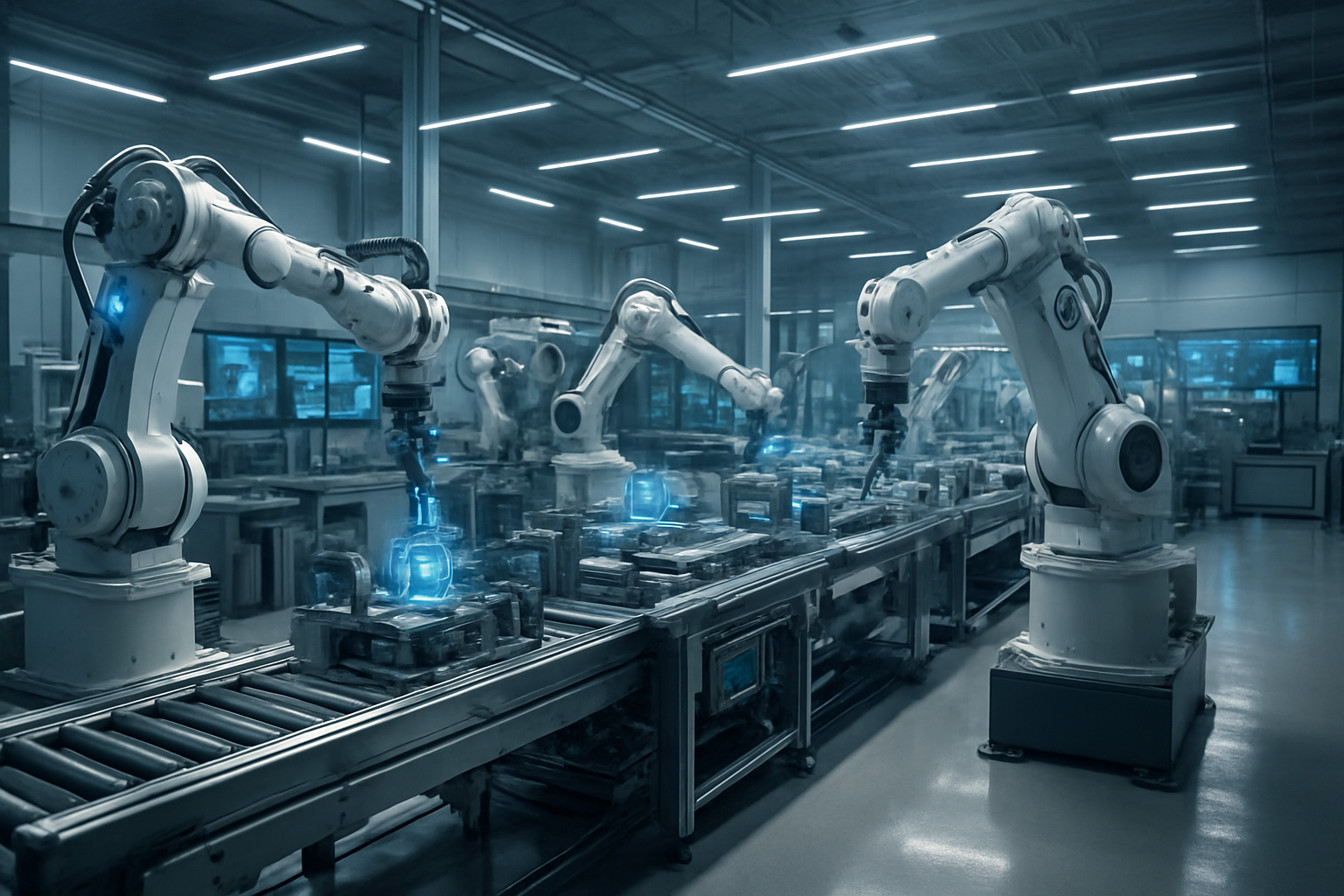
Manufacturing leaders who act now will build an unassailable competitive advantage through AI agent adoption. With 40% of manufacturers already implementing AI solutions and the global AI-agent market projected to grow from $3.66B to $139.12B by 2033, the strategic window for early adoption is rapidly closing. Companies implementing AI agents today are achieving 20-30% inventory reductions, 5-20% logistics cost savings, and measurable efficiency gains across quality management, supply chain operations, and commercial processes.
The path forward requires no massive investment or multi-year transformation. Start with one high-volume, repeatable pain point in your organization—whether that’s quality exception handling, supply chain disruptions, or quote-to-cash processes. Implement AI agents within your existing Microsoft ecosystem, establish clear guardrails, and track measurable results in the first 60-90 days. As teams experience firsthand benefits, adoption spreads organically, creating the cultural foundation for AI-driven manufacturing excellence. The question isn’t whether AI agents will transform your operations—it’s whether you’ll lead that transformation or follow your competitors.